Robert Wieland, in the book Grace on Trial, writes about three motivations that are often empoyed in seeking to gain converts to Christianity. These are:
1) Pie in The Sky - Don't you want the streets of gold and to live forever?
2) Fear of Hell - You don't want to go to hell? Whether hell is an ever burning reality (as most evangelicals teach) or a punishment that will burn out (as Adventists and some evangelicals teach), both use the scare tactic that was used by Jonathan Edwards in his classic sermon "Sinners in the Hand of an Angry God."
3) God Will Hook You Up Here And Now - Pay your tithe or plant your seed and watch God hook you up with blessings.
These are the basic approaches that all of us use. Fear of death, hope for heaven, or hope for a better life down here.
Ultimately all three of these are based in what can I get? The larger question is can any of these three motivations keep us?
When our life decends into a hell that looks like Job's life, will the false promise of God hooking us up with "things" down here stand up?
When the enticing temptation of immediate gratification comes before us, can either a fear of hell or a hope for heaven keep us from sin?
Weiland attempts to break through these motivations by positing the Cross. When one looks at the cross in its fullness, according to Weiland's theology, one cannot help but be transformed as one was willing to "go to hell" or "say goodbye to life forever" to save all of humanity.
This reality does not use hope of heaven or threatenings of hell to change us. Simply a look at the cross and "by beholding we become changed."
If this is true, then we need to look at the cross again. How does the cross eclicit this kind of love response?
And finally, is this love something that can guide us to a higher place than the hoep of heaven, fear of hell, or seeking the hookup?
Showing posts with label Everlasting Gospel. Show all posts
Showing posts with label Everlasting Gospel. Show all posts
Friday, September 14, 2012

Wednesday, June 2, 2010
TULIP, Calvinism, and The Great Controversy Theme
[caption id="attachment_2229" align="alignleft" width="274" caption="John Calvin"] [/caption]Herbert Douglass, in the book Fork in the Road has written a helpful summary of why Calvinism and Adventism cannot be unified on the idea of what the Gospel means. You may not know it, but Calvinists are the "big wigs" in the evangelical world. From popular scholars like R. C. Sproul to pastors like D. James Kennedy and John McAurthur. Certainly there are some who do not agree with all of the positions of the Calvinistic cause, but many of the popular authors and preachers in the Evangelical world are Calvinists.
The Five Points
By Calvinists, I mean those who hold to the five points of Calvinism, or at least most of the points. This is often referred to as TULIP, In short these are:
Where the System Begins
They begin their system with the idea of God’s sovereignty. God is ultimately in charge and can do anything God wants to do. No one else has freedom. God alone has freedom. Due to total depravity, we cannot chose anything but sin. Thus God must choose those who will be saved and thereby will be choosing those who will be lost. Humanity can not judge God, the saved should be happy that they are among the ones that God has chosen to save.
Adventism’s Starting Point
Adventism begins with the concept of God giving humanity Freedom. We say that God has given the gift of freedom to all of humanity. We get to choose whether we will follow Satan or God’s government. This gift of freedom has been given to the entire universe of beings, according to this idea.
Interestingly God uses this world to demonstrate where Satan’s principles will lead. Thus God chooses to demonstrate the rightness of God's cause in this system.
Finally, God has chosen all of us in his son to eternal life, and those who do not reject God’s rule of love will be saved at last.
In the end, we have one scheme beginning with God’s sovereignty that makes human freedom impossible. On the other end we have humanities freedom as being something given to humanity by a sovereign God. God wants us to choose the righteous government. But the Calvanistic system makes such a choice impossible unless the one has already been predestined to salvation.
Finally, in the Adventist system, God allows Satan’s choice to play out before the entire universe. Freedom of choice is an important component of Adventism while it is impossible under Calvinism.
Can’t Synthesize the Two
While there are certain similarities between the two groups, and both can recognize that one can be saved while agreeing with the other position. But like my Calvinist friend told me after a long conversation, "You may be saved...but you are wrong on this issue." So we see that we can’t synthesize the two views. And why would we want to? Either the Calvinist view is right, or the Adventism view is right, or perhaps logically another option is correct, but all of them are not right. Because of this, it is time for Adventists to stop getting our “understanding of the love of God” from folks who do not accept at all the freedom of humanity which is at the foundation of the Great Controversy that we preach. It is time to decide if we are Adventists or not. If not, then Calvinism might be an acceptable alternative, go ahead and look into it, but if you are going to be Adventist, then it is time to stop running behind the evangelical teachers who have different presuppositions than we have. If we are going to be Adventists, be Adventists.
They Don’t Mix
No Adventism and Calvinism don’t mix. It is time to stop acting as if it does. It is time to stop acting like the contradictions that we are currently spouting are actually “paradoxes.” It is time to stop telling our people that our evangelical friends have Jesus and we have the law, so go to them to get Jesus and come to us to get the law! No! If we ain’t preaching Jesus, then we need to start preaching him in the context of the message that God has given to us. Be not deceived our Calvinist brothers and sisters do have a place for the law, and it is an important place, but it is just not the same place we have for the law and for Jesus in our understanding.
So what is the answer? Maybe it is time to start reading Steps to Christ again instead of Experiencing God. What’s the answer? Using The Great Controversy Theme as a hermeneutical key to interpret everything. Otherwise we will continue to drift wondering why we even exist as a people.
 [/caption]Herbert Douglass, in the book Fork in the Road has written a helpful summary of why Calvinism and Adventism cannot be unified on the idea of what the Gospel means. You may not know it, but Calvinists are the "big wigs" in the evangelical world. From popular scholars like R. C. Sproul to pastors like D. James Kennedy and John McAurthur. Certainly there are some who do not agree with all of the positions of the Calvinistic cause, but many of the popular authors and preachers in the Evangelical world are Calvinists.
The Five Points
By Calvinists, I mean those who hold to the five points of Calvinism, or at least most of the points. This is often referred to as TULIP, In short these are:
- Total Depravity – When humanity sinned it was placed in a position where they can do nothing but sin. It is sometimes called “total inability.”
- Unconditional Election – God unconditionally elected some to be saved.
- Limited Atonement – God only died and provided the atonement for salvation to those who were elected to be saved.
- Irresistible Grace – The grace that saves cannot be resisted by the human being it is given to.
- Perseverance of the Saints – Once you are saved, there is nothing that can remove you from that saved condition.
Where the System Begins
They begin their system with the idea of God’s sovereignty. God is ultimately in charge and can do anything God wants to do. No one else has freedom. God alone has freedom. Due to total depravity, we cannot chose anything but sin. Thus God must choose those who will be saved and thereby will be choosing those who will be lost. Humanity can not judge God, the saved should be happy that they are among the ones that God has chosen to save.
Adventism’s Starting Point
Adventism begins with the concept of God giving humanity Freedom. We say that God has given the gift of freedom to all of humanity. We get to choose whether we will follow Satan or God’s government. This gift of freedom has been given to the entire universe of beings, according to this idea.
Interestingly God uses this world to demonstrate where Satan’s principles will lead. Thus God chooses to demonstrate the rightness of God's cause in this system.
Finally, God has chosen all of us in his son to eternal life, and those who do not reject God’s rule of love will be saved at last.
In the end, we have one scheme beginning with God’s sovereignty that makes human freedom impossible. On the other end we have humanities freedom as being something given to humanity by a sovereign God. God wants us to choose the righteous government. But the Calvanistic system makes such a choice impossible unless the one has already been predestined to salvation.
Finally, in the Adventist system, God allows Satan’s choice to play out before the entire universe. Freedom of choice is an important component of Adventism while it is impossible under Calvinism.
Can’t Synthesize the Two
While there are certain similarities between the two groups, and both can recognize that one can be saved while agreeing with the other position. But like my Calvinist friend told me after a long conversation, "You may be saved...but you are wrong on this issue." So we see that we can’t synthesize the two views. And why would we want to? Either the Calvinist view is right, or the Adventism view is right, or perhaps logically another option is correct, but all of them are not right. Because of this, it is time for Adventists to stop getting our “understanding of the love of God” from folks who do not accept at all the freedom of humanity which is at the foundation of the Great Controversy that we preach. It is time to decide if we are Adventists or not. If not, then Calvinism might be an acceptable alternative, go ahead and look into it, but if you are going to be Adventist, then it is time to stop running behind the evangelical teachers who have different presuppositions than we have. If we are going to be Adventists, be Adventists.
They Don’t Mix
No Adventism and Calvinism don’t mix. It is time to stop acting as if it does. It is time to stop acting like the contradictions that we are currently spouting are actually “paradoxes.” It is time to stop telling our people that our evangelical friends have Jesus and we have the law, so go to them to get Jesus and come to us to get the law! No! If we ain’t preaching Jesus, then we need to start preaching him in the context of the message that God has given to us. Be not deceived our Calvinist brothers and sisters do have a place for the law, and it is an important place, but it is just not the same place we have for the law and for Jesus in our understanding.
So what is the answer? Maybe it is time to start reading Steps to Christ again instead of Experiencing God. What’s the answer? Using The Great Controversy Theme as a hermeneutical key to interpret everything. Otherwise we will continue to drift wondering why we even exist as a people.
Wednesday, May 12, 2010
Salvation and Our Works
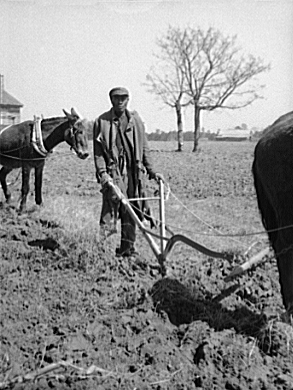 Descriptions of the Christian life often take one of two turns. The Christian life is either one of hard drudgery as we seek to either gain or retain salvation. In this model some being or entity is meticulously keeping track of our actions to immediately send us to hell if we die after committing a sin that we have not or could not erase through a prayer of repentance. The great desire of Christians who hold this model is to hope and pray that they will have the fortitude and strength to become, by God's grace, worthy of eternal life.
The other model has us without any worry whatsoever for Christ has done it all. We will live better automatically by the slow progress of Christian life. One need not do anything but simply passively "rest" in Jesus. As we do less and less Christ will do more and more. Again the direction of this model of Christianity is the eternal life of the individual Christian. Here, because Christ has given us salvation, we need not work for it. And thus, presumably, believing in that will allow us to be changed people. Here the great desire is to remove from people the fear of loss of salvation and allow them to live in the certainty.
It seems as though we bounce back and forth between the two poles. We move from emphasizing Christian responsibility to assurance of salvation. When one side is emphasized, we seem to feel as though we are missing something, and we probably are, and then we go back to the other side. Bouncing back and forth between works and lack of works.
Is there a way out? I think that both models have within them the core driving force of "personal individual salvation." We are meticulously trying to keep track of our sins due to that fear of losing salvation. Or we are constantly trying to affirm our personal individual salvation to get above that fear in model two.
Is this our only choice? Must We Choose Between Passivity and Legalism? Those who hold to model one are right, the Christian life does require effort. It does not come naturally to those of us who are born in sin. However, they are wrong in tying our salvation to that growth. Those who hold to model two are right in separating growth from our salvation. They are right in noting that growth comes from salvation and not the other way around. However, they are wrong in making growth a simple matter.
Both models err in making the ultimate purpose salvation of individuals. They ignore or limit the Great Controversy and the ultimate vindication of God's plan as a part of the Christian life. Yes hard work is needed, but it is not to gain salvation. Salvation provides the tools to battle with Self on the great battleground. Salvation has been given to us as Christians and it is important to live in that belief.
However, if one is saved, one will work. One will even "labor to enter the rest." There will be a struggle with self. There will be a struggle with sin. But this is not to gain salvation. This is to make sure that we do not, by our actions, make God look bad. It is to demonstrate our love for God.
It is not simply "love God and do as you please." Your sinful nature will continue to clamor for the wrong things. We will have to deal with the old man and fight the old man until glorification removes that sinful nature from us. But we don't do it to gain salvation. That is not our great desire. We don't even do it to retain salvation. We do it for God and we do it for the world.
In the end, we need a change in look. We must get past the idea that the whole universe revolves around our salvation. God has given that to us. Now it is about showing an demonstrating our love for the one who has done so much for us. Even if it means working hard and doing what our flesh does not wish to do.
Tuesday, May 4, 2010
Package of Beliefs or Mindset
 Is Adventism primarily a package of beliefs or a mindset? It would seem that the dominate view is that it is simply a package of beliefs. These beliefs are either important or not so important or kind of important depending on who you ask. This package includes the sanctuary, state of the dead, and Sabbath. Some lament the objective fact that many are no longer preaching sermons on these doctrines. However, when you dig a little deeper and ask them what kind of sermon they are referring to, it seems as though they mean sermons that didactically defend or teach these doctrines.
While it is true that there is a time to hear these doctrines defined and defended, I question whether the 11:00 service Sabbath morning is that best time. No wonder people got turned off on these doctrines. They may have simply heard them taught over and over again until they assumed that all know them. I mean do we really need a sermon every week (or every other week) that simply delineates why a doctrine is true?
The key thing that is missing in this analysis however is that Adventism is more than a package of beliefs, it is a mindset. The Sabbath flows from that mindset. The Sanctuary doctrine was once an organizing principle that helped to describe the mindset. Our great problem is not that we don't hear any sermons calculating 1844 anymore. Our great problem is that there is no underlying "Adventist" mindset through which we preach any of our sermons. In short, if T.D. Jakes preaches a sermon on the Goodness of God, that does not mean Adventists should not preach a sermon on the same subject. Adventists must preach sermons on the same subject. My contention, however, is that when an Adventist preaches that sermon it will include aspects, views, insights, and even definitions of "goodness" that come from our interaction with Sabbath, Sanctuary, Bible Wholeness, and yes the Third Angel's Message.
We don't need a regurgitation of a package of beliefs that no one sees having any relevance to daily living. We need a deeper understanding of who we are that will affect any sermon we preach. Even, yes, on those occasions when we preach from the package of beliefs.
Monday, April 26, 2010
Doctrines and Preaching
 Now we know that we must only preach the Gospel. This provides a problem for those of us who feel the need to preach such doctrines as the Sabbath, State of the Dead, and Sanctuary. Some of us might give in to the temptation of sometimes preaching Gospel and other times preaching these doctrines. Such a temptation is understandable in light of the belief that we need these doctrines, but it is problematic in that it places some doctrines above Gospel.
 Some preachers get around this by only preaching doctrine "sometimes" and emphasizing the Gospel above these said doctrines. they preach "doctrine" because they Adventist, but preach "Gospel" primarily because they are Christians. I wholeheartedly understand this decision in light of the fact that we must major in Gospel preaching, but I do not think that is our only choice.
Other preachers see the deterioration of our understanding of doctrines in modern day Adventism. In light of that, they emphasize the doctrines. You can hear their sermons as these few "true believers" preach discourses on the law and its importance. They preach the sabbath as the seventh day and meticulously calculate 2300 to come out to 1844. I understand this decision as well in light of the fact that we do have a message or a perspective that God has given to us to give to the world. But that is not our only choice either.
E. J. Waggoner wrote in Bible Studies on the Book of Romans:
Nothing can be added to the preaching of the righteousness of God by faith of Jesus Christ. What about these doctrines, as the Sabbath, immortality, etc?-Since the “kingdom of God and His righteousness” is the one thing needful…all of these doctrines are simply divisions, lines depending upon the one thing,-all summed up in the doctrine of the righteousness by faith. We can preach nothing else…
Waggoner is noting that you do not choose between Gospel and doctrines. No! You preach gospel totally. If you want to preach the Sabbath, then please show us how it is connected to Gospel. Show us how it is connected to the Good News. Please connect it to the larger framework of what God is "up to" in this world. Don't just get up and preach the Sabbath as the seventh day and sit down. We must turn the page and move towards a so-what that tells us how these doctrines are connected. And dare I say, if you can't connect the doctrines to Gospel, then PREACH ON SOMETHING ELSE UNTIL YOU CAN!
As preachers, let us take seriously our call to bring good tidings of great joy. Whether you are preaching Revelation, Sanctuary, Sabbath, or even State of the Dead. If you do that, then our preaching of this message will align with and join in with the messages that Ellen White identified as the beginning of the Loud Cry...
Saturday, April 24, 2010
The Cross and Preaching
Christ Centered Adventist preaching must uplift Christ in its core. Ellen White wrote on page 156 of Gospel Workers:
What we see here is that the cross and the power and pardon that we receive from there is at the center of our presentation. She even calls it the third angel's message that is to be proclaimed. Again it is only at the cross where justice and peace meet.
Of all professing Christians, Seventh-day Adventists should be foremost in uplifting Christ before the world. . . . The great center of attraction, Christ Jesus, must not be left out. It is at the cross of Christ that mercy and truth meet together, and righteousness and peace kiss each other.
 The key here is that the cross of Christ must be at the center of any great Adventist preaching, according to Ellen White. The cross provides the place where mercy and truth will unite. If you want to make sure that you are providing the balance between mercy and truth, then you must have the cross of Christ at the center of all of your expositions.
In the 1888 era, Ellen White again argued for the centrality of Jesus in great Adventist exposition. She noted in her celebration of the preaching of A. T. Jones and E. J. Waggoner on pages 91-92 of Testimonies to Ministers, that their message
"was to bring more prominently before the world the uplifted Saviour, the sacrifice for the sins of the whole world. It presented justification through faith in the Surety; it invited the people to receive the righteousness of Christ, which is made manifest in obedience to all the commandments of God...This is the message that God commanded to be given to the world. It is the third angel's message, which is to be proclaimed with a loud voice, and attended with the outpouring of His Spirit in a large measure.
What we see here is that the cross and the power and pardon that we receive from there is at the center of our presentation. She even calls it the third angel's message that is to be proclaimed. Again it is only at the cross where justice and peace meet.
No we do not preach the cross sometimes and some conception of "Adventism" at other times. If Sister White is right here, then we must only preach the cross and uplift the savior. This point is key to any Adventist preaching methodology.
Wednesday, December 23, 2009
Full Salvation Has Been Given
 E. J. Waggoner writes:
It is a full and complete salvation that God has provided; it awaits us as we come into the world; and we do not relieve God of any burden by rejecting it, nor do we add to His labor by accepting it. The Glad Tidings, pg 66.
Yes Christ has paid the price for our total salvation. The scriptures state that Jesus tasted death for everyone. Hebrews 2:9. He has given all of humanity this great gift of salvation...all of us. In another place the apostle writes that Jesus is the savior of all of people. 1 Timothy 4:10.
As Sister White wrote in The Desire of Ages on page 25:
Christ was treated as we deserve, that we might be treated as He deserves. He was condemned for our sins, in which He had no share, that we might be justified by His righteousness, in which we had no share. He suffered the death which was ours, that we might receive the life which was His.
Yes salvation full and complete has been given to all people as a gift. Don't throw away this gift, for Christ has paid too much for it, yes it is yours.
Saturday, December 19, 2009
Christ Was Made
 Alonzo Jones writes:
Christ was "made" what, before, He was not in order that the man might be made now and forever what he is not.
Christ was Spirit. 1 Corinthians 15:45. He became flesh in order that humanity, who is flesh, might become spirit. John 3:6; Romans 8:8-10.
Christ, who was altogether of the divine nature, was made partaker of human nature, in order that we who are altogether of the human nature "might be partakers of the divine nature." 2 Peter 1:4.
Christ, who knew no sin, was made to be sin (2 Corinthians 5:21), even the sinfulness of humanity, in order that we, who knew no righteousness, might be made righteous.
Christ was made what he was not before so that we might be made that which we were not before. Praise God for this transaction!
Friday, December 18, 2009
Victory Through Submission
 E. J. Waggoner wrote:
if we are willing to be as submissive to the word as is the inanimate creation, the fruit will be as abundant...We, like grass, are but teh powerless instruments through which God manifests His own power...Our part is to yield to the divine husbandman; His part is to cause the growth and the perfect fruit.
The command has come forth in 2 Peter 3:18 to grow. Grow in grace. Dr. Waggoner tells us that all we but do is submit to that just as the grass submits to the call of God in the beginning to "let the earth bring forth..."
God gives us the power to do God's will. God blesses us with divine strength to obey that Word. If we would simply allow the vine to send its nutrients to us as we abide in that vine that abides in us. (John 15:4) Then we should see victories in our life, but these victories will not be for our own glory, but they shall be to glorify the Master who is actually doing the work through us, we have just submitted to that great power that is at work.
Friday, November 13, 2009
Why Be Foremost in Uplifting Christ?
 Why Should Adventists be foremost in uplifting Christ? That is the question that I attempt to address in this audio. The text for the audio can be found at this link.
Tuesday, March 3, 2009
The God of Creation and the Advent Faith
[caption id="attachment_961" align="alignleft" width="255" caption="The Creator's Protection"] [/caption]
The Second Advent Movement has a two fold reason to emphasize the importance of the creative power of God. The first of these points is the Sabbath. The fourth commandment tells us to remember the Sabbath day for it was on that day that God created the heaven and the earth. (Exodus 20:11).
In addition, Revelation 14 :7 tells us of a last day revival of this important work as the first angel yells "Worship him who made the heaven, the earth, the sea, and the fountains of waters!" For these reasons, the creative power of God is an important message for these last days. In this audio, Pastor Cox emphasizes these points as well as the "gospel connection" for an emphasis on creation.
 [/caption]
The Second Advent Movement has a two fold reason to emphasize the importance of the creative power of God. The first of these points is the Sabbath. The fourth commandment tells us to remember the Sabbath day for it was on that day that God created the heaven and the earth. (Exodus 20:11).
In addition, Revelation 14 :7 tells us of a last day revival of this important work as the first angel yells "Worship him who made the heaven, the earth, the sea, and the fountains of waters!" For these reasons, the creative power of God is an important message for these last days. In this audio, Pastor Cox emphasizes these points as well as the "gospel connection" for an emphasis on creation.
Sunday, March 1, 2009
Will God Hook Us Up?
 Is God going to hook us up? Is that the Gospel? What has God told us?
What has God Promised us?
Thursday, September 4, 2008
Bringing the Garden of Eden to America
 One of my favorite Authors, E. J. Waggoner had an article entitled "The Sabbath and the Cross" in The Present Truth of July 20, 1893. You can find the full article at 1888 Most Precious Message. In that article, Waggoner states:
(W)e find that the Sabbath was given to man at the close of the creation of the earth, before the fall. It is an institution of Eden. See the second chapter of Genesis. Therefore the keeping of it as it was given, must bring something of Eden into this wicked world.
Forgetting Eden
Bringing eden to this world. Our attempts at rest and to set aside earthly pursuits is not to be a burden, but to be a delight. We are called to bring Eden into this world. As we go about doing what we must do in our daily lives, we can sometimes lose the big picture. We can lose focus even as we seek to do what God would have us to do. There are many obligations of family, community, work, spirituality, and other important pursuits that we must engage in as people who are productive citizens. All of these things can easily make us forget who we are and why we are here.
The Great Reminder
The Sabbath is the great reminder, ultimately we want the endless intimate community that consist of God and humanity. We want the close communion that Adam and Eve shared as the model community of faith and love. We want to be relieved of worries about jobs. We want to set aside the paper that we just turned in but fear its quality. We want an even deeper connection to God than we could possible have during this week. And yes "we want a place where the wicked cease from troubling and the weary are at rest." Praise God that even though Adam and Eve where thrust out of Eden, they got to take a little of Eden with them in the Sabbath.
Saturday, March 1, 2008
Audio 32 - A. T. Jones - Sabbath Rest

A. T. Jones speaks specifically about how the Sabbath contains and proclaims Jesus Christ as creator and redeemer. The document is read by Sherman Haywood Cox II.
Thursday, February 28, 2008
Audio 31 E. J. Waggoner - The Sabbath Rest that Remains

E. J. Waggoner provides a brief exposition of Hebrews 4:9. What is the rest that remains for the people of God. The document is read by Sherman Haywood Cox II.
Sunday, January 6, 2008
Why You Posting Jones and Waggoner?
Someone contacted me through email asking, "Why do you publish information on A. T. Jones and E. J. Waggoner?" The short answer is, because I love the way that they seek to teach both Gospel and Adventism at the same time. However a little more indepth answer appears below.Importance of 1888
To answer this question, we must first recognize that many people from the different theological perspectives of Adventism see in their message, or the history of that time, a God given message. Some see in the 1888 messengers and attempt from God to shake the church out of the icy grip of legalism. Others see in it a call to bring Adventism more in line with the gospel that the other churches have taught. Others see in the 1888 message an important call to move to Christianity first before the distinctive teachings of Adventism.
As I think about the 1888 messengers, I remember a few discussions with friends. First there is the friend who said that it was only after reading these messengers that he saw how Adventist doctrines can help him in his understanding of the Gospel. Before Jones and Waggoner he saw the Sabbath as important, but not connected to the Gospel as he does now. He sees in the doctrine of the nature of humanity (state of the dead) the reality that Christ, in his humanity, decided to die a death that would mean eternal death. Some articulate this by saying that "Christ went to hell." In the Sanctuary, my friend now sees one who is looking out and working for humanity right now with a purpose that includes the cleansing of humanity.
Another friend told me that 1888 reminds him that in our "Adventist-ness" we can never lose our "Christian-ness. We are a part of that global body called Christianity and none of our doctrines can separate us from that body.
Why I Like The Messeges
Personally, I think that 1888 allows Adventism to make sense in the context of the Gospel. It emphasizes the Gospel, but it emphasizes that we look at and understand it through our Adventism. Certainly A. T. Jones and E. J. Waggoner are not infallible. I agree with Ellen White, God Alone is infallible. But in these writings, I see two individuals, striving to see and learn more of Jesus in our characteristic doctrines, not in spite of them. Waggoner doesn't teach the sabbath just for the sake of the sabbath. Jones doesn't teach the sanctuary just for the sake of the sanctuary. Everything is taught to gain a greater understanding of Jesus Christ and his mission.
My first attempts at looking at theology came from reading Jones and Waggoner. I will always love these three for that reason. Certainly, I don't agree with everything, but 1888 reminds me that our doctrines and teachings are not an end to themselves, but are there to help us understand Christ. Agree or disagree with them, they tried to just preach Christ and him crucified within the context of Adventism.
Monday, March 27, 2006
E. J. Waggoner a Practical Theologian
The other day I was reading Christ and His Righteousness by E. J. Waggoner of 1888 fame. In it Dr. Waggoner states, "Every doctrine of the Bible is for our practical benefit, and should be studied for that purpose. I immediately thought of The Homiletical Plot by Eugene Lowery which encourages us to ask the question "What bind does a doctrine get us out of?" I like the question and have come back to it often in the past as can be shown in this post from the past. 
I will also come back to the question in the future. Answering that question will force the sermon and teaching to be practical and has the added benefit of helping the congregation to understand what good is a doctrine for daily living.
After stating that we must look for the Practical benefit Dr. Waggoner then tries to tackle the Sabbath doctrine and seeks to point us to a practical basis for understanding the doctrine. In the next couple of posts we will look at this attempt.
Wednesday, February 1, 2006
1888 and Race
I have heard a lot of talk about 1888 and the 1888 message, but we have heard very little on the issue of Race and these two ministers. I remember Elder Dudley used to say that God was trying to come to earth back in 1888, but many white folks were trying to go without the black folks.
Interestingly I looked in the General Conference Bulletin of 1887, one year before that 1888 Conference. During that year God was trying to remove the color line from the Adventist Church by means of A.T. Jones, E.J. Waggoner, and others. I found this on the "Words of the Pioneers" CD.
The discussion begins:
In response Elder D. H. Lamson offered the following: "Resolved, That this Conference recognize no color line."
The General confernce Bulliten of 1887 then continues
Elder Waggoner then amended the resolution by substituting the following:
The amendment was carried. Then the conference referred the resolution to a committee to "consider the matter carefully, and recommend proper action to the Conference."
Then at the end of the day we have the following notation in the Bulletin:
Thus ends God's attempt to use the 1888 messengers to remove the Color line in 1887.
God Tried to Remove the Color Line in 1887
Interestingly I looked in the General Conference Bulletin of 1887, one year before that 1888 Conference. During that year God was trying to remove the color line from the Adventist Church by means of A.T. Jones, E.J. Waggoner, and others. I found this on the "Words of the Pioneers" CD.
The discussion begins: This matter being thus left, the question of the color line was taken up by Elder A. T. Jones, who took the position that no color line should be recognized. Elder J. M. Rees made a few remarks, stating the situation in Tennessee. There is no trouble in the church, but if a minister should go into a place and have the colored people mingle in the congregation with the whites, he would have no white people to talk to.
Resolved to Remove the Color Line
In response Elder D. H. Lamson offered the following: "Resolved, That this Conference recognize no color line."
The General confernce Bulliten of 1887 then continues
An animated discussion followed, in which the following delegates took part: A. T. Jones, J. O. Corliss, S. H. Lane, E. J. Waggoner, R. A. Underwood, and J. H. Cook. On the one side it was argued that the existence of a color line is a great evil, and that it should not be recognized; that there is neither Jew nor Greek, bond nor free, male nor female, but that all are one in Christ Jesus, and that if the people of the South do not want to mingle in a congregation with the colored people, let them stay away. On the other hand, it was argued that the color line does exist, and that nobody can obliterate it, and that inasmuch as this Conference cannot legislate for anybody outside of Seventh-day Adventists, we should take things just as we find them, not arousing any unnecessary prejudice, but preaching the truth to all who come, leaving the Spirit of God to obliterate the color line in the hearts of those who may be converted by the truth.
Waggoner Clarifies the Issue
Elder Waggoner then amended the resolution by substituting the following: WHEREAS, The Bible says that there is neither Jew nor Greek there is neither bond nor free, but that all are one in Christ Jesus, therefore, Resolved, That it is the decided opinion of this Conference, that when the colored people of the South accept the Third Angel's Message, they should be received into the church on an equality with the white members, no distinction whatever being made between the two races in church relations.
The amendment was carried. Then the conference referred the resolution to a committee to "consider the matter carefully, and recommend proper action to the Conference."
The Reversal
Then at the end of the day we have the following notation in the Bulletin:
As the question pertains to the best methods to be pursued in the presentation of the truth in the South, where persons of African descent are most numerous, and as no one of the committee has had any personal experience in that work, we have deemed it proper to confer with those whose fields of labor have been in that section of the country. As the result of these interviews we find those who are present who have labored in the South unanimous in the opinion that it is easy to pursue a course which will create no disturbance, and do no injustice to the colored people. This being the case, your committee can see no occasion for this Conference to legislate upon the subject, and would, therefore, recommend that no action be taken, and that all reference to this question be omitted from the minutes.
Thus ends God's attempt to use the 1888 messengers to remove the Color line in 1887.
Monday, January 9, 2006
The Gospel or Adventism? Which will you Choose?
Often we hear preacher's place what is termed the Gospel above Adventist distictive beliefs. They say that the Gospel is more important than any of the other doctrines and teachings of Adventism or any group. When we take that as an assumption, and I simply do it for the sake of argument, we are given the choice between Adventism and the Gospel. Not surprisingly many of us chose the Gospel. However such a choice makes our Adventism at best irrelevant and at worst an impediment to the Gospel. Thus the Sabbath, Sanctuary, State of the Dead, and all of these doctrines must step aside while the Gospel stands front and center.
Instead of only preaching Adventism sometimes and the Gospel other times I would suggest that an Adventist preacher must preach both at the same time. If it ain't the Gospel it shouldn't be preached, if it ain't Adventism then why has God chosen you to preach it?
If we take this assumption and our Adventist beleifs are a sidelight that is at best only tangentially related to the Gospel then we must ask the question "Why preach Adventist distinctives at all?" Such a mindset causes the doctrines to be trotted out every so often while the more important "Gospel" is preached. Because many follow such a road there is a backlash among those with more conservative proclivities. Some of these would say that the Gospel is Adventism. At the very least the gospel of the last days is such that we must hold on to Adventism and its deistinctive beleifs. A more softened version of this would say that Adventism is just as importnat as the Gospel and thus should be preached just as often. According to all of these views there is a beleif that Advnetist beliefs should take a stronger role and perhaps stand near the Gospel in presentation.
I wish to propose another road. Instead of saying that Adventism is less important than the Gospel or that Adventism and the Gospel must be balanced, or that the Gospel is Adventism, I would suggest another course. I would suggest that we see and understand the Gsopel through our Adventism. Our Adventism provides stories, pictures, and themes to help us illuminate the Gospel in ways that others would not be able to see. Just as the Methodists with their strong view of holiness brought a light on the Gospel of God to the reformation understanding, we have a role to help illuminate the Gospel.
There are elements that we see that others cannot see due to our doctrines. We are those who see the Gospel through the Sabbath. The one who calls us to rest. The importance of Creation and recreation. We see the Gospel through the Sanctuary. The importance of God with us. The importance of cleansing and ultimate cleansing. We see the gospel through the State of the Dead. There is only life through Christ.
Instead of only preaching Adventism sometimes and the Gospel other times I would suggest that an Adventist preacher must preach both at the same time. If it ain't the Gospel it shouldn't be preached, if it ain't Adventism then why has God chosen you to preach it?
Subscribe to:
Posts (Atom)