Showing posts with label adventist homiletics. Show all posts

Friday, September 14, 2012

Can You Teach Me To Do An Adventist Sermon?

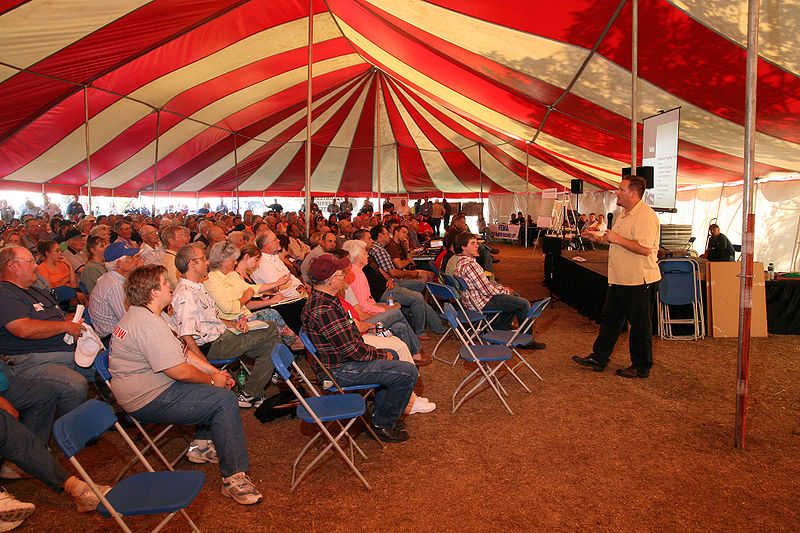
[caption id="attachment_2763" align="alignleft" width="300" caption="Photo by Jeremy C. Schultz"][/caption]That is an interesting question that came to my box a little while ago. The preacher had visited my Soul Preaching website where I seek to teach the fundamentals of the Black Preaching Tradition. The questioner was an Adventist local elder who wanted to improve his sermons, but wondered where can he plug the "Adventism" into them. The questioner rightly noted that the Soul Preaching website is an interdenominational resource that does not teach the doctrines of any body.

But the question remained. It was an interesting one for me who has studied homiletics. I immediately began asking some interesting questions and interacted with some assumptions that many have. First, how many Adventists have you heard condeming thsoe who are not of that faith for preaching sermons that "don't say anything."

What is it to preach something? Some people think that a lecture on religious themes is a sermon. How many of you have listened to a preacher of that school. You end up with a long 60 minute distilling of a doctrine that is meant to enlighten the mind. Yet the heart is unstirred. Often these lectures have very little practical value. At the end of the day, tell me how this doctrine you are preaching makes a difference in my daily life. That is your job preacher.

Another issue that might be going on is that the questioner might be thinking that the worship sermon is the only time to teach doctrines. So we must do it then. It is very problematic to try to have the preaching moment to be your whole training. What about Sabbath School? Do you use that as a traning opportunity or simply a preaching opportunity for your local elders? What about Wednesday Night Prayer meeting. I like how our Baptist sisters and brothers normally call this Wednesday Bible study. Do you have prayer? Do you have study?

I am actually hearing about churches around doing training of their members. Here in Nashville Riverside SDA Church under Furman Fordham seems to have a training program to get people on the right track. The point that I am making is that it is unreasonable to expect the one hour worship sermon to bear the brunt of the theological training in a church.

But more than that, should it even be. I would argue that the sermon should foster an encounter between the people, God, and scripture. It should not be simply to learn facts for the mind. It should be an encounter that is informed by theology and the other things that we have learned, but no it is more than that. It is a time for the intellect and the emotions to celebrate the good news of God's reign on this Sabbath day.

So know and understand your theological understandings which includes Biblical wholeness (State of the Dead). Yes, go head on and get a deeper understanding of the theology of Sabbath and its great need at this time. Yes understand your theology, but don't just preach it. Yes preach it, but then always take the time to Celebrate it. Turn the page. Be the Cheif celebrator of the implications of the truth you have presented in the sermons.

AT the end of the day. You are not preaching an "Adventist sermon" merely when you give the facts of the Sabbath as being the Seventh Day. You are preaching an "Adventist sermon" when you use the principle of Sabbath rest to inform how you treat people on this day and the rest of the week. you are preaching an Adventist sermon when you use the princple of Sabbath rest as a theological tool to interpret what it means to live a faithful life in a world that is trying to remove all our rest.

Yes, I am calling for you to tell your people what these doctrines mean. Don't just tell them to me and tell me I better beleive them and sit down as if you have done something. No work to foster an experience with the Lord whom we understand better because of something about the Sabbath.

So step one...stop thinking that an Adventist sermon is a Bible study that gives proof texts for a doctrine....

So I would argue that the whole idea of a sermon as merely a lecture is preoblematic. But then we have the other side where doctrine plays no part in the

Thursday, July 15, 2010

Dr. Calvin Rock and Reform in Adventist Preaching

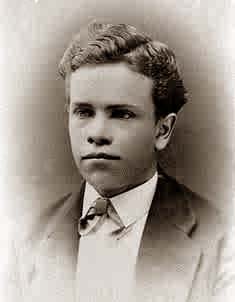
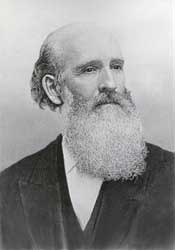
[caption id="attachment_2347" align="alignright" width="175" caption="Adventist Co-Founder James White"][/caption]Dr. Calvin Rock wrote about the content and purpose of Adventist Preaching in his influential Ministry Article of September 2000 entitled "Black SDA Preaching Betwixt and Between." We have looked at that article periodically on the website and will look at it again. This time we look at it for his definition of Adventist preaching.

He writes:

Adventist preaching...essence is clearly one of reform---Sabbath reform, health reform, family reform, stewardship reform, etc. Preaching that does not ring with the certainties of Daniel and Revelation; that is not flavored with the symbols of the sanctuary; that does not uphold the law of God; that does not honor the prophetic gift of Ellen white; that does not extol justification by faith is not Adventist preaching. It may be truth, but it is not Present Truth; it may constitute an engaging performance, but it does not constitute the remnant proclamation.


There are a few things that are interesting about this quote. First it makes "reform" that upon which our preaching rests. It is not simply about preaching truth. Certainly it includes preaching truth, but it is a certain kind of truth. It seeks to preach an end time message. It seeks to preach getting better. It seeks to prepare a world. All of these things require change. And it is to us as Adventist preachers to proclaim these truths.

So we preach "present" truth. This is a truth that is needed right now. We teach truth that reforms and calls the hearer to a better way of living. Finally it has at its base that which we agree with others as well as that which has been given to us to teach for we preach the gospel through the symbols of the Sanctuary as we uphold the Law of God while keeping ahold of the prophetic gift. But we must never forget the truth of justification by faith.

Friday, July 2, 2010

All Eyes on Atlanta – Ted N. C. Wilson To Address Church On Sabbath – What I Want To Hear

New General Conference president Ted N. C. Wilson will address the world church this sabbath in perhaps his most listened to sermon to date. This has been an interesting election for a number of reasons. I hear some jubilant voices who have almost a "we won" tone.

Then there are those who are fearful of what they think may be a retreat to an earlier era that they fear will not work in today's world. These argue that Adventism must be a "big tent" where anyone can become a member regardless of their views on evolution.

As I look at this sermon this weekend, I will be listening to echos of Gospel. I will want to hear a word of forgiveness and power that comes to us by the power of Jesus Christ. In short, I hope to hear about why I am a Christian.

In addition, I want to hear echoes of our peculiar movement. I want to hear a reminder of the role and the importance of this movement specifically. It is too easy to forget that there is an assignment given to this movement, and I hope that we will hear a word of that. In short, I hope to hear about why we are Adventist.

I also want to hear about the plans for the forward progress through mission. I hope to hear not a reheated fossilized message that does not address the needs of today, neither do I hope to hear untested conjectures that may not work.

Finally, I want to be inspired by its connection to the Holy Ghost. I don't want to just hear truth, I want to hear inspired present truth.

Remind us that we are Christian, remind us that we are Adventist, inspire us to God's mission in the world by a connection to the Holy Spirit. And then the people will be ready for 5 more years of work, toil, and life in this world, "should Jesus delay his coming."

Thursday, June 17, 2010

The Adventist Basics In Adventist Preaching

You know those who play Jazz music know of a concept of "standards." These are the basic songs that you must know if you are to be an acceptable musician. They consist of old tried and true songs that have been passed down from generation to generation of musicians. Musicians don't have to play it in exactly the same way, but they must know the "tunes" and be able to play them when called upon.

The last few months, I have been looking at some old sermon material that my father has showed me. Specifically they are the very old book Public Evangelism by J. L. Shuler published in 1939. In addition there is the book Evangelistic Methods: Step by Step by Fordyce Datamore published in 1957. And then there is God Made An Evangelist by E. E. Cleveland published in 1994.

These books primarily are "Evangelistic" sermons and methods for doing evangelism. Many of the principles are still being used, although modified, by evangelists today. There are a lot of things of interest in these materials to me, a seminary trained homilititian, and we will discuss these over time on the website.

Basic Sermons Passed Down


But one thing that was striking is the consistency of the sermons in the books. There were a number of basic sermons that seemed to be passed down from generation to generation of Adventist Evangelist. There were a few new sermons or different sermons, but in general they were the same sermons with only a change in sermon title and/or illustrations. Shuler even suggests that the great Adventist Evangelist should be always on the lookout to have modern and appropriate titles to "speak on the old-time truths of the message."

Shuler's Daniel 2 sermon was titled The Fate of Europe. This became simply titled "Daniel 2" by Datamore. Finally Cleveland gave it "The Great Prophetic Metal Man. Does He Live Today?" Shuler added other possible titles as "Seven Words That Changed History." Those words were "They shall not cleave one to another." And so on with other sermons like the Second Coming, Millennium, and State of the Dead.

Of particular interest was the Sabbath. Here evangelists would use titles like "What Day Should Christian's Keep" and "The Missing Text" which goes through all the texts that refer to Sunday in the Bible. These sermons took on titles like Mary's Mother's Birthday and "The Father Didn't, The Son Wouldn't, The Apostles Couldn't. Who Did."

What is interesting though is that while the titles changed, the basic idea behind each of these sermon/lectures was a number of texts that would be presented to prove the validity of the claims of the Evangelist. These basic sermons were the "standards" or the "Adventist Basics" of the Adventist Evangelist. (note: Instead of using the term "standards" which has a specific meaning among Adventists, I will use the term "Adventist Basics" for understanding.)

Listen Over And Over Again


Daniel 2 had to be preached under whatever title. Daniel 7 had to be preached as well. The history of the papacy had to be preached. Revelation 12, 13, and 14 as well. These were the "Adventist Basics."

And just like a jazz audience who have heard the standards over and over again, they never tire of hearing them. So the Adventist audience who have heard Daniel 2 wonder how the preacher will present it this time.

But the "standards" or "Adventist Basics" did not just include the books of Daniel and Revelation. In the 16 week meeting the preacher had to preach why the preacher accepts the Bible as the Word of God. There were also sermons on Family life like Cleveland's "Marriage-The Secret to a Happy Home Life." In addition, all of them had sermons on "confession, repentance, and forgiveness."

Building The Framework of Adventism


These basic building block sermons were a solid part of the preaching in tents. They gave a solid foundational understanding of the framework of Adventism. However, in today's world, 16 weeks 6 nights a week will not work. There are just too many nights. That meeting has been truncated to 5 weeks 4 nights a week. And thus many sermons had to be removed. Some of them were the standards. And thus now we are in an interesting position where these sermons that everyone had heard. Whether they agreed with the position or not, they at least have heard them. Now we have generations of Adventists who don't know the "Adventist Basics." They don't know the basic Adventist argumentation. Now these "Adventist Basics" are hidden away in theological texts. Books like "1844 Made Simple" is simply an expansion of a Bible study that every Adventist had heard in the evangelistic meetings. It was an "Adventist Preaching Standard."

I do not think that we can simply go back to the past. Neither do I think that we can or should attempt a 16 week, 6 night a week meeting in 2010, but we have to find a replacement for that meeting that will pass on the "Adventist Basics" to another generation.

Tuesday, May 4, 2010

Package of Beliefs or Mindset

Is Adventism primarily a package of beliefs or a mindset? It would seem that the dominate view is that it is simply a package of beliefs. These beliefs are either important or not so important or kind of important depending on who you ask. This package includes the sanctuary, state of the dead, and Sabbath. Some lament the objective fact that many are no longer preaching sermons on these doctrines. However, when you dig a little deeper and ask them what kind of sermon they are referring to, it seems as though they mean sermons that didactically defend or teach these doctrines.


While it is true that there is a time to hear these doctrines defined and defended, I question whether the 11:00 service Sabbath morning is that best time. No wonder people got turned off on these doctrines. They may have simply heard them taught over and over again until they assumed that all know them. I mean do we really need a sermon every week (or every other week) that simply delineates why a doctrine is true?


The key thing that is missing in this analysis however is that Adventism is more than a package of beliefs, it is a mindset. The Sabbath flows from that mindset. The Sanctuary doctrine was once an organizing principle that helped to describe the mindset. Our great problem is not that we don't hear any sermons calculating 1844 anymore. Our great problem is that there is no underlying "Adventist" mindset through which we preach any of our sermons. In short, if T.D. Jakes preaches a sermon on the Goodness of God, that does not mean Adventists should not preach a sermon on the same subject. Adventists must preach sermons on the same subject. My contention, however, is that when an Adventist preaches that sermon it will include aspects, views, insights, and even definitions of "goodness" that come from our interaction with Sabbath, Sanctuary, Bible Wholeness, and yes the Third Angel's Message.


We don't need a regurgitation of a package of beliefs that no one sees having any relevance to daily living. We need a deeper understanding of who we are that will affect any sermon we preach. Even, yes, on those occasions when we preach from the package of beliefs.

Monday, April 26, 2010

Doctrines and Preaching

Now we know that we must only preach the Gospel. This provides a problem for those of us who feel the need to preach such doctrines as the Sabbath, State of the Dead, and Sanctuary. Some of us might give in to the temptation of sometimes preaching Gospel and other times preaching these doctrines. Such a temptation is understandable in light of the belief that we need these doctrines, but it is problematic in that it places some doctrines above Gospel.

Some preachers get around this by only preaching doctrine "sometimes" and emphasizing the Gospel above these said doctrines. they preach "doctrine" because they Adventist, but preach "Gospel" primarily because they are Christians. I wholeheartedly understand this decision in light of the fact that we must major in Gospel preaching, but I do not think that is our only choice.

Other preachers see the deterioration of our understanding of doctrines in modern day Adventism. In light of that, they emphasize the doctrines. You can hear their sermons as these few "true believers" preach discourses on the law and its importance. They preach the sabbath as the seventh day and meticulously calculate 2300 to come out to 1844. I understand this decision as well in light of the fact that we do have a message or a perspective that God has given to us to give to the world. But that is not our only choice either.

E. J. Waggoner wrote in Bible Studies on the Book of Romans:

Nothing can be added to the preaching of the righteousness of God by faith of Jesus Christ. What about these doctrines, as the Sabbath, immortality, etc?-Since the “kingdom of God and His righteousness” is the one thing needful…all of these doctrines are simply divisions, lines depending upon the one thing,-all summed up in the doctrine of the righteousness by faith. We can preach nothing else…


Waggoner is noting that you do not choose between Gospel and doctrines. No! You preach gospel totally. If you want to preach the Sabbath, then please show us how it is connected to Gospel. Show us how it is connected to the Good News. Please connect it to the larger framework of what God is "up to" in this world. Don't just get up and preach the Sabbath as the seventh day and sit down. We must turn the page and move towards a so-what that tells us how these doctrines are connected. And dare I say, if you can't connect the doctrines to Gospel, then PREACH ON SOMETHING ELSE UNTIL YOU CAN!

As preachers, let us take seriously our call to bring good tidings of great joy. Whether you are preaching Revelation, Sanctuary, Sabbath, or even State of the Dead. If you do that, then our preaching of this message will align with and join in with the messages that Ellen White identified as the beginning of the Loud Cry...

Saturday, April 24, 2010

The Cross and Preaching

Christ Centered Adventist preaching must uplift Christ in its core. Ellen White wrote on page 156 of Gospel Workers:

Of all professing Christians, Seventh-day Adventists should be foremost in uplifting Christ before the world. . . . The great center of attraction, Christ Jesus, must not be left out. It is at the cross of Christ that mercy and truth meet together, and righteousness and peace kiss each other.


The key here is that the cross of Christ must be at the center of any great Adventist preaching, according to Ellen White. The cross provides the place where mercy and truth will unite. If you want to make sure that you are providing the balance between mercy and truth, then you must have the cross of Christ at the center of all of your expositions.


In the 1888 era, Ellen White again argued for the centrality of Jesus in great Adventist exposition. She noted in her celebration of the preaching of A. T. Jones and E. J. Waggoner on pages 91-92 of Testimonies to Ministers, that their message


"was to bring more prominently before the world the uplifted Saviour, the sacrifice for the sins of the whole world. It presented justification through faith in the Surety; it invited the people to receive the righteousness of Christ, which is made manifest in obedience to all the commandments of God...This is the message that God commanded to be given to the world. It is the third angel's message, which is to be proclaimed with a loud voice, and attended with the outpouring of His Spirit in a large measure.

What we see here is that the cross and the power and pardon that we receive from there is at the center of our presentation. She even calls it the third angel's message that is to be proclaimed. Again it is only at the cross where justice and peace meet.


No we do not preach the cross sometimes and some conception of "Adventism" at other times. If Sister White is right here, then we must only preach the cross and uplift the savior. This point is key to any Adventist preaching methodology.

Tuesday, November 24, 2009

Preaching With Power Concludes

preachingWithPowerWe have now looked at every one of the preachers in the book. This book is an important book for at least 2 reasons. First it is one of the few Adventist homiletics books in print. Secondly, it is specifically about Black Adventist preaching It may be the only book on that subject published by the church.

Here are links to all of the discussions. Please note that I only had 4 questions in mind when reading the book. You might have other questions and thus should go and get the book yourself.

Preaching with Power - Henry Wright

Preaching With PowerAs we continue our discussion of the book Preaching With Power by R. Clifford Jones we get to Pastor Henry Wright. Henry Wright is the Senior Pastor of Community Praise SDA Church in Alexandria Virginia. He rose to prominence when he was a professor in the Department of Religion and Theology at Oakwood College. Over his career he has also been a Conference president and Union Secretary. He is well known and considered by many to be a great preacher of the Gospel.

Understanding of Preaching


Elder Wright sees preaching as "God's Word manifested in human personality." He states that this is why he resists the idea of copying anyone else. I think this is an important point. There is a reason why God has called you as an individual preacher to preach the gospel. Our individuality manifests itself in our selection of texts, the questions we ask the text, and even what we do and do not emphasize. Wright continues this idea by stating that the sermon is "God's word sifted through human experience."

Wright's understanding of preaching includes an agony of preaching that that manifests itself in 3 ways. First, the preacher recognizes that he or she is a part of the problem that the preacher is addressing in the sermon. Second, the preacher recognizes that often there are some who know more about the Bible than he or she does. Finally, we realize that the Gospel is always beyond our ability to describe or define it.

Method of Sermon Preparation


Pastor Wright has a very extensive 8 step method of sermon preparation. Before he describes it he states that he makes certain assumptions of the preacher. The first assumption is that the preacher is constantly reading the Bible, theological works, professional material, as well as magazines of current events. The second assumption is that the preacher is living a life of prayer.

Step 1 is to select the passage and read it in as many different translations as possible. During this reading Wright jots down any thoughts that come to his mind. He says that it can take him 2 hours to do this step.

Step 2 is to look up key words making use of his Greek and Hebrew reading ability. He asks questions like who is writing, what is the situation of the writing, to whom was it written? During this step he consults several commentaries and Bible Dictionaries.

Step 3 is to find a theme statement for the sermon. During this phase he asks the question what am I trying to accomplish? He notes that a passage of scripture can point to many differnt possibilities so during this step he decides on the one that he will preach in this sermon.

Step 4 is to find illustrative material that is applicable to the people that he is preaching to. His favorite source of illustrations is the Reader's Digest.

Step 5 is to write out the sermon. Wright says that he is a manuscript preacher and thus writes it out word by word. While he has a good memory and therefore is not tightly bound to the manuscript, 9 times out of 10 he takes it into the pulpit with him.

Step 6 is to think about how he will end the sermon. He emphasizes that you don't raise new things in the conclusion. This reminds me of one thing my intro to homiletics professor said "Start Strong, End Strong, and make the middle as short as possible."

Step 7 is to evaluate the sermon based on his evaluation method. This method includes asking himself questions like does the sermon flow correctly? Is there unity of thought? Does it have purpose?

Step 8 is to rehearse by reading the sermon out loud.

Understanding of Black Preaching


Wright is both a believer in and not a believer in Black preaching. He states that we should remember that black preacher's learned to preach from white preachers. He notes that the white preachers that Black preachers learned from were not the lecturn lecture-like preachers that we think of today, but the preachers of Black Preaching: The Recovery of a Powerful Artthe plains like Jonathan Edwards. This thought is also echoed by Henry Mitchell in Black preaching that even states that there is a white counterpart to whooping.

After having said that he defines black preaching as a style of preaching that was story-telling, incisive, highly descriptive. He notes that such a style was important for the slaves who could not read the Bible for themselves.

Understanding of Adventist Preaching


In this place he does not directly address Adventist preaching but he does note that our preaching has become more hands on in the last few years versus the years when he was younger. Today you are more likely to hear sermons that tell you how to get along with people or succeed than sermons about doctrinal content. While he believes there is a place for such sermons, he notes that we cannot forget the doctrines or teachings in our sermons.

Preaching with Power - Dr. John Nixon

Preaching With PowerOur next preacher in the book Preaching with Power is John Nixon. He is an associate ministerial secretary of the North American Division Ministerial Department. He is currently transitioning from being the senior pastor of the Oakwood College Church in Huntsville, AL to being the senior pastor of the Collegedale Church at Southern Adventist University in Collegedale, TN.

Understanding of Preaching


Pastor Nixon believes that preaching is taking that which is behind the text and explaining it to the people. Thus the purpose is to find the meaning of the text and interpret it for today. This is an explicitly theological approach to the preaching event.

Method of Sermon Preparation


Pastor Nixon provides a pretty explicit sermon preparation model. To begin Elder Nixon suggests that the preachers spend 30-40 hours in 5 days on the sermon alone. One wonders how one can keep up such a large number of hours if one is a pastor. Pastor Jones actually asked him twice and Pastor Nixon confirmed. One thing that is pretty certain is that if you spend so much time on a sermon and you follow a plan you will probably come out with a very good sermon.

The first step in preparation is to read the passage several times in different translations. This step is completed before any formal exegesis. This will serve as an orientation for the preacher to the passage. I have seen this suggested by other homilititians like Brad Braxton in Preaching Paul.Preaching Paul

Next the preacher will perform formal exegesis to get at the orginal meaning of the text. Pastor Nixon emphasizes that there are two horizons of the text the meaning in the past and the meaning today. This serves to emphasize what was spoken earlier about "the meaning" of the text rather than the text itself being what the preacher is emphasizing.

Next, the preacher must determine the "Christocentric Theology of the Text." This is the component "behind the text" that teaches the gospel. Where is the Gospel in the text? where is the good news in the text? These are the components of the text that we attempt to pull out at this point in the process.

Finally, the form of the sermon (narrative, deductive, inductive, etc) falls naturally out of the sermon preparation precess itself. In other words the process guides the form of the sermon rather than arbitrarily choosing a sermon form or always choosing the semonic approach.

In addition to the above process, Pastor Nixon seeks to have the preacher gain a "homiletical bias" where the preacher looks at the world through the lens of homiletical possibilities which will allow the preacher to gain all the illustrations one needs without resorting to illustration books.

Understanding of Adventist Preaching


Pastor Nixon emphasies the importance of Adventist preaching being "Christ-centered rather than apologetic." I interpret him to mean that we should not simply seek to defend the truth of the doctrines we present (apologetic), but that we should constructively seek to preach the Gospel through our Doctrines. In another place he suggests that the Adventist preacher "explain the Gospel in the form of distinctive Adventist Understandings." I find such an approach to be very interesting.

Understanding of Black Preaching


Dr. Nixon emphasizes that the Black church tradition has an element of form, but it is more theology than form. This way one can actually preach a "Black" sermon in many different styles including a "low-key" approach.

Dr. Nixon defines the theological approach of Black preaching as an emphasis on God's care and concern for the downtrodden and opppressed. He includes in this approach to Black preaching the judging of Kings and Rulers who do not live up to the truth. Dr. Nixon quickly adds that the Black preacher must be "Biblical and not just political." It would be interesting to have him further define and describe what he means in other places.

I especially like Nixon's approach to Adventist preaching which resonates with what I have tried to say. I have attempted to define Adventist preaching as using Adventism as glasses through which we see and understand the Gospel. Dr. Nixon and I both seem to be saying the same thing here. Such an approach opens up the doctrines of Adventism to be used at all times and in all sermons without all sermons becoming didactic or apologetic. I think that there is a time for apologetic and didactic moments, but there are other moments when the preacher must preach in other modes and I think that our Adventism must influence even those preaching moments.The Heart of Black Preaching

I also like the defining of Black preaching as primarily theological. We have seen such an approach in some of the other preachers in this series as well as other homiliticians such as Cleophas LaRue who defines Black preaching as largely about an approach to the Bible where God is actively invovled in history. The belief that God is standing with the opporessed seems to be a common theme that some homiliticians see as at the foundation of Black Preaching.

Preaching with Power - Dr. James Doggette

Preaching With Power
James Doggette is a professor at Oakwood College as well as the Pastor of the Madison Mission Seventh-day Adventist Church in Huntsville, Alabama. Dr. Doggette is a dynamic speaker who relatively recently has held an Amazing Facts seminar in Huntsville Alabama.

Understanding of Preaching


Dr. Doggette like Barry Black sees importance in Phillip Brooks definition of preaching as "truth poured out through personality." Dr. Doggette nuances this insight by stating that "Preaching is divine truth or biblical truth communicated through personality." Dr. Doggette also echos Paul Scott Wilson by emphasizing that preaching is an event and not "merely verbal communication."

Method of Sermon Preparation


Pastor Doggette states that he first seeks to know the story, then he condenses the sermon from that story into one sentence. He and Dr. Jones notes that this is what Haddon Robinson refers to as the Big idea. Doggette notes that Haddon Robinson's work has influenced his preaching more than any other book.Biblical Preaching: The Development and Delivery of Expository Messages

Pastor Doggette's main exegetical approach is to look at the Biblical story and seek to find the story either in the passage or behind the passage. He states that he is not really concerned primarily about word studies, but about getting at the story. He notes that every passage has as story.

The Practice of PreachingAlso Doggette, contrary to much opinion, does not either use a manuscript in the pulpit or write out one. He refers to the performed sermon as a "jazz performance in that feeling plays a big role in the outcome of the sermon."

Understanding of Adventist Preaching


Pastor Doggette reminds all Black Adventist preachers to be sure to preach the Seventh-day Adventist doctrinal and prophetic themes in addition to themes of liberation and the mangement of power. Doggette does not want Adventist preachers to forget that they are Adventist. He believes that a "greener grass" idea is creeping into the Black Adventist ministry as more and more Black Adventist pastors obtain graduate degrees and doctorates from other schools. Doggette believes that rubbing shoulders with great preachers from other denominations has caused the Black Adventist preacher in many cases to "discount the distinctive truths and values we have as Adventists."

Understanding of Black Preaching


Dr. Doggette sees black preaching as primarily prophetic in the tradition of the Old Testament prophets. He sees, therefore, a primary purpose of the Black preacher is to "stir things up." He suggests that Black Adventist preachers who seek to be true to Black preaching and Seventh-day Adventist preaching should study the lives of the prophets and note that they were often opposed but it was God who held them up when others did not.

Dr. Doggette's brings a theological focus to both Black preaching and Adventist preaching. He sees importance in the Black Adventist preacher being true to both traditions. I like Doggette's statement that Black preaching is prophetic. Too often we think of Black preaching as just a style of preaching. Others may think of it as a structure to our sermons like "narrative preaching." Doggette sees it as primarily an approach to preaching that "stirs things up" as it prophetically challenges those with power to use it correctly.

Dr. Doggette also points out that there is a great temptation to set aside distinctive Adventist teachings to run after the "greener grass." I believe that the Adventist distinctive teachings, but also the Adventist distinctive "mindset" or "theological approach" should undergird all that we do. As I have stated elsewhere "If it ain't the gospel it shouldn't be preached, if it ain't Adventist, why has God chosen you to preach it?"

Preaching with Power - E. E. Cleveland

The next interview is with E. E. Cleveland. He is probably the greatest Adventist Evangelist of our time. When one thinks of Adventist Evangelists E. E. Cleveland's name will almost certainly come up


Understanding of Preaching


Elder Cleveland did not explicitly speak about his?theology of preaching, but he did speak of a few important points. First Preaching With Powerhe notes that the preacher must have a holy boldness. Next, the preacher must be totally dependent on the Holy Spirit. Next, all of our preaching must be Christ-centered.? Cleveland reminds us that we should not allow T. D. Jakes or Rod Parsely to have a corner on preaching Jesus.


Another interesting point that Cleveland brings out is that the preacher cannot always recognize the difference between a good and a bad sermon.? Just preach your sermon and leave the results to God.? Cleveland tells the story of a time he thouhgt the sermon was not really that good, but someone came, this taught him to just preach.


Method of Sermon Preparation


Once again Elder Cleveland does not really give a method, but he does say that he always prepares by daily reading three texts. First is 2 Samuel 7:8. The second is Nehimiah 13:14. The third is Exodus 23:25.? It is interesting that all three are Old Testament texts which shows how the Adventist preacher and the Black preacher uses the Old Testament just as much as the New.


Understanding of Adventist Preaching


Elder Clevland emphasizes that Jesus must be at the center of our presentations as Adventist ministers. He states that Black Adventist preachers have remembered this. He gives the example of the Sanctuary. He states that Black Advnetists have always kept Jesus first in this doctrine and have not gotten caught up in the perephnalia of the Sanctuary. Elder Cleveland quotes Henry Wright who spoke about the Sanctuary and stated in effect, "I don't care if the throne is moveable or not, all I care is that there is a thrown and we have an advocate."


Understanding of Black Preaching


Elder Cleveland emphasizes that it is important to know Black history if you are to be a black preacher. Cleveland believes that Black preaching is not about emotion, but about contextually relating the Gospel to the historic struggles of black people. He believes that?this kind of Black preaching is?totally compatible with Adventist preaching.


Elder Cleveland's?discussion of the?black struggle for freedom is significant in that he?identifies the freedom movement?as God's movement. The move for black liberation is not peripheral to God's hand in history, but it is God's hand in history. Thus Black history becomes a discussion of God's acts in history and not merely a discussion of abstract facts.? Black history is transformed into looking for God's hand in history.? Thus when one speaks of a narrative approach to preaching we can tell the Biblical story as narrative,Preaching With Power but we also can tell the narrative of God's present actions.?


Another interesting point about this kind of preaching is that it reminds us that God cares not merely about individuals, but also about groups.? God cares about Black people as a people.? God cares about individuals AND groups.??Revelation teaches us that Jesus hand is over history.? The Seven Churches teach us that God is taking care of the Church throughout history.? Trimming the lamps so that it can truly be the people of God.?? God is actively invovled in helping us individually, but also as a people.? God is not coming back for an individual or even for us as individuals, but God is coming back for a people a remnant.? It is true that we become members of a group individually, but it is also true that Jesus is coming back for the Bride which is the church corporate and universal.


I think Black Preaching can help us bring back this corporate identity to evangelical Christianity whihc has totally ignored the importance of the corporate in spirituality.? Perhaps this is why some have such a hard time explaining why one should go to church and not just stay home and pray by oneself with their own connection to Jesus.

Preaching with Power - C. D. Brooks

Preaching With Power Elder Brooks defined himself as a "traveling Preacher." He has been the Field Secretary of the General Conference of Seventh-day Adventists as well as the speaker/director for Breath of Life television program.

Understanding of Preaching


Elder Brooks states that his theology of preaching is that he should "exalt Christ and his word."

Method of Preaching


Elder Brooks does not really define a method of preparation, but he does state provide direction to pastors. Brooks suggests that "Sabbath sermons [should] be pastoral, Sunday night's sermons [should] be evangelistic, and those for Wednesday nights [should] deal with things like modeling Jesus and Christian standards." In addition, Brooks emphasizes that one should present the whole "cycle of truth." Including such subjects as "Sabbath, Judgment, Second Coming, Christian Standards, etc."

Understanding of Adventist Preaching


Elder Brooks makes explicit use to Adventist resources throughout his interveiw. He notes that his influences on preaching were Advntist including his mother, E. E. Cleveland, and C. E. Mosely. Interestingly enough after all these years he still quotes his homiletics professor, Elder Mosely, in answering questions. Elder Mosely has had a great influence on him.

Brooks also emphasizes that the content of Advnetist preaching must include things like Sabbath, Judgments, etc. in the full "cycle of truth" as noted above. Perhaps most interesting is that Brooks states that if he had three books to take with him on a desert Island they would be The Great Controversy, Desire of Ages, and the Bible. Brooks states that he could preach from those three books until Jesus comes. Elder Brooks' presentation makes greater use of Adventist materials and refers to Ellen White often and easily.

Preaching With Power

Understanding of Black Preaching


The interview does not deal with Black Preaching at all. It would be interesting to see what Elder Brooks has to say about the nature of Black PReaching and its connection to the Gospel as understood by Seventh-day Adventists. It would be interesting to take Bradford's idea of Black Preaching being issues oriented and compare that to the explicit Advnetist preaching that Elder Brooks presents. For example, how is preaching about and to the Black communities ultimate quest for liberation look when addressed by the unique resources used in Adventist preaching (Ellen White, Adventist understanding of the Bible)? Another interesting question is: Does Adventism have anything to say to the world beside Jesus will come and clean up all this mess at the Second Coming? Need it say anything else?

We also might bring back Barry Black's suggestion that Adventist preaching might teach the doctrines in the context of narrative. Then we might see some unification of the different kinds of preaching that Elder Brooks brings. Can we preach the Sabbath in such a way that it becomes pastoral, prophetic, and liberative at the same time? I think that Black's suggestion can push us to not just seek to prove the doctrines but also to celebrate them. Perhaps Wednessday night we can teach the truth of the doctrine and on Sabbath morning we can celebrate it?

Celebration and Experience in Preaching I think following Black's suggestion to use narrative and also Black's stating the importance of celebration can open up avenues to celebrate Adventism and not just teach the correctness of the doctrine. However, I think that Bradford's understanding also must be kept in mind that the Gospel does address important issues in the community and we should address thsoe as well. And finally, we must keep Bradford's idea that Black Preaching cannot become only for black folk. The social justice that Black preaching is a call for justice to all.

?

Preaching with Power - Charles Bradford

Preaching With PowerThe next interview is with Charles Bradford. Elder Bradford has had a very productive career within adventism including becoming the first AFrican American to be elected presdient of the North American Division of Seventh-day Adventists. His career has been largely as an evangelist and church administrator.

Understanding of Preaching


Elder Bradford's theology of preaching is based in the fact that God is the source of all preaching. Bradford emphasizes that the "preacher is one amoung many" in a "preaching community."

?

Method of Sermon Preparation


Elder Bradford states that his method of sermon preparation is from the New York Theological Seminary. The approach consists of first looking at the text noting "words, events, thoughts, and nuances." Next he suggests that we develop a theme from this observation and from study. Bradford notes that he believs that one can get a theme from any text. Then Elder Bradford writes out an outline. After completion of the outline, Elder Bradford sets the sermon aside for "a few days." After that he puts on the flesh.

This time is important to Bradford who states that it takes a long time to put a sermon together. He compares it to the growing of a good crop of strawberries. It takes a long time.

One cannot forget that the preparing of the preacher is very important. Elder Bradford suggests that we make use of the Mystical Disciplines. This is interesting in that one is not often used to hearing Adventists talk about this, but we usually use the terms prayer, meditation, study, etc. I think that such a revival of these disciplines is very much needed today.

Understanding of Adventist PreachingPreaching With Power


Elder Bradford's section of the book says very little about traditional Adventist preaching which is surprising in that he has much to say about it in his book Preaching to the Times. That book is a very valuable addition to any Advnetist preacher's library. In future weeks I hope to discuss that book in this blog. But Elder Bradford gives some hints on his thinking on Adventist Preaching in this intereview. First Elder Bradford emphasizes that his influences on preaching came from Adventist sources. Also Elder Bradford seeks to emphasize that we cannot fall into the trap of the "wealth and success...pop psychology" gospel. Next Elder Bradford talks about using Advnetist sources like the Adventist Bible Commentary as well as other commentaries from other denominational traditions.

Elder Bradford reminds us, without saying their names, that we cannot fall into the trap of making the gospel pop-psychology or about wealth and success down here.

Understanding of Black Preaching


Elder Bradford believes that Black preaching is "issue oriented." Here Black preaching addresses issues that are important to the Black community. Elder Bradford however is quick to state that the Gospel is greater than any Black or White issue and transcends them both.

I think that Elder Bradford's concern of a Gospel that is only relevant to or only worries about issues in one community can be problamatic. I think it is interesting that other Black Preachers are wrestling with this issue. Henry Mitchell stated that he beleives that the hope of American Christnaity is in the hands of the Black Church. The idea was that the black church has always stood with the weak and poor and thus represents a struggle for rightness in the world. Not just in terms of Race, but of all who are oppressed.

I am also reminded of a class in the Theology and ministry of the Black Church by Dr. Forrest Harris. The teacher tried to emphasize that when the Black church is true to its principles of equality it is relevant to more than just black people.

They Like to Never Quit Praisin' God: The Role of Celebration in PreachingFinally, I am reminded of Pastor Frank Thomas who wrote "They Like to Never Quit Praising God." In his lectures on the Book he teaches that we become universal through our very particularism. In other words when a Black preacher goes deep enough into his/her own expereince the preacher teaches a universal Gospel.

I think Elder Bradford reminds us like these other voices that our Gospel cannot become provincial and only applicable to a certain group. But like these other voices, I think that Black "issue" teaching can become universal or trasncendent if we, as Frank Thomas states, push it.

Preaching with Power - Dr. Barry Black

Preaching With PowerThe first interview is with the chaplain of the United States Senate Dr. Barry Black. Dr. Black has had an illustrious career in Chaplaincy and is a demonstration that the Adventist Pastorate is not the only vocation for Seventh-day Adventist preachers.

Understanding of Preaching


Dr. Black acknowledges Phillip Brooks as informing his understanding of preaching and describes it as "truth through personality." Dr. Black states that his "upbringing on welfare" shapes his preaching. I think that this is an important for preachers to recognize that God has chosen them at the present time to preach the Gospel to the people. Dr. Black reminds us that we cannot fight in other's armor but we must preach the Gospel as ourselves.

Method of Sermon Preparation


Dr. Black states that his sermons come from his devotional life. Dr. Black states that he "preaches out of the overflow of [his] devotional life. He emphasizes the importance of reading reference materials, but also encourages preachers to use their own imagination. Dr. Black only provides an outline of his method, but the little he describes reminds me of another pastor's. This pastor kept meticulous notes on his devotional life. His devotions for today are the basis of sermons for next year. That way he knows exactly what he will preach next year. The method is helpful in that it promotes a healthy devotional life, but one must be sure to add the second component of adding resource materials if one is to provide depth to the sermonic event.

Understanding of Adventist Preaching


On page 17 Dr. Black states that Black SDA preachers have the challenge of making Adventist doctrines more attractive. He states one way of doing this as placing the doctrine in the Bible story. For example, he states why not preach the State of the dead within the context of a story like Lazerus. This idea is very intriguing. I was talking to someone the other day about how many times our preachers normally preach with imagination, but when they move to preaching the doctrines we end up with a "proof text method". I think it would be interesting to place the doctrines in the Biblical story and more than Dr. Black's suggestion to ask "why didn't Lazerus tell about the glories of heaven," I would push for a methodology that applies Dr. Mitchell's idea of celebration to the doctrines. I would encourage the Black preacher to ask, "What is there in the doctrine to celebrate?"

Black Preaching: The Recovery of a Powerful Art

Understanding of Black Preaching


In the interview Dr. Black doesn't speak explicitly about the nature of Black Preaching. He does refer to the fact that he has studied with Henry Mitchell. This might explain why Dr. Black explains the Black sermon as "narrative" and that there is a musicality and a lyrical quality. I think we must emphasize the form (narrative) that black sermons often take and the style (musicality and lyrical quality). This is important, but as we shall see, we also must include the distinctive theological focus that Black Preachers bring to the preaching event. This is shown in Cleophas LaRue's Heart of Black Preaching as well as Dr. Calvin Rock's article on Black SDA Preaching found in the September 2000 Ministry Magazine. In addition to the above Dr. Black speaks of the importance of understanding venue. You do not preach in the same way in every location. This is probably an important point for Dr. Black in that he has the opportunity to preach in many different settings. I think that appropriateness is important, but one must also keep in mind the importance of being a prophetic voice. This is a very important thing to keep in mind for those of us who are called to preach in other venues. As one who on occasion had to do this, we must find a way to determine what is appropriate, what should be preached, and also how we can give a call to better living informed by our understanding of the Gospel.

Preaching with Power

R. Clifford JonesDr. R. Clifford Jones has?edited a book of interviews with prominent African American Seventh-day Adventist preachers entitled Preaching with Power.? You can obtain the book from the ministerial association.? In the next 11 posts I will look at each preacher?s

  1. Understanding of preaching.

  2. Method of sermon preparation

  3. Understanding of Adventist preaching

  4. Understanding of Black preaching


Preaching With PowerI would encourage all preachers to purchase and learn from the book.? In the introduction Dr. Jones presents a few points that have relevance to the four questions above.? First, on page ix Dr. Jones states that sermon preparation is hard work.? It requires much reading and study.? Second, Black preaching is difficult to isolate, but it is more form than style.? Also it has, according to Jones, two ?characteristic themes? God identifies with the oppressed and that the oppressed will eventually be delivered.? Finally Dr. Jones emphasizes that all the preachers believe that Black Adventist preachers must retain their unique Seventh-day Adventist teachings while they hold on to their cultural heritage.

Thursday, July 5, 2007

Problems of Some SDA Preaching

Calvin Rock speaks about the necessity for Black Preachers to make use of their cultural experiences in their sermons as well as staying truly "Adventist" in their preaching. Then he notes that there are two problems that can stand in the way of a Black Adventist Preacher from doing this effectively.

Rock notes:

A primary problem with traditional Adventist preaching is its socially conservative interpretation of the Scripture, and that of Black Preaching is its acceptance of raw excitement as the definition of success and the user of arbitrary stimulation as a means of attaining that acclaim.


Socially Conservative Adventist Preaching


The first problem, according to Rock, that makes it difficult to preach both in the Black Tradition as well as in the Adventist Tradition is the tendency of Adventist preaching to be pro-status quo.

He notes that this comes from first a tendency to read the Bible in a "minimalist view of New Testament sociology." Here they see in some of the actions of Jesus (not striking out against Roman oppression) and Paul (sending Omnesimus back to his slave master Philemon).

However Rock quotes Yoder who sees in both cases Paul and Jesus pushing the bounds of the status quo as much as possible. For example, Jesus called Herod "That fox." (Luke 13:32) and Paul told Philemon to receive Omnesimus as a brother. Rock sees Ellen White in this tradition when she told Adventists to disobey the Fugitive Slave Act, because at that time one could push the bounds even further than in the time of Paul and Jesus.

Another Reason for the socially conservative reading is the idea that since there is no hope of overcoming societal evil we should not even try. We simply wait for Jesus to do it all at the Second Coming. I would encourage all to read my own series on that subject "The Second Advent and Passivity").

A final reason why Socially Conservative preaching is considered normative in much Adventist preaching is because they often make a dichotomy between physical and spiritual and thus interpret the Bible's insistence on choosing the spiritual as negating the physical. Because of this the physical needs of humanity are not a part of the work of the church of Christ. Even if you do address them, you address them as individuals and not corporate entities. Often you address them to "open the door to real evangelism."

Some Adventists are challenging this notion by looking at how work for others is inextricably connected with preaching the Gospel. It is a fundamental disconnect to preach the Gospel of peace and say nothing about war. It is fundamentally inconsistent to preach the Gospel of Love and say nothing about the hate that is running rampant in the world. It is a fundamental problem to preach the Second Advent while living as if this present order will go on as is indefinitely.

Certainly All Adventist preaching does not fall into this trap. Also it is true that there are others outside of the Black Tradition that are teaching against this kind of preaching that promotes the status quo, but the African American Preaching Tradition provides a vehicle for a group of preachers to stand up against this and preach the Full gospel rather than a truncated version thereof.

In the next post we will look at what Rock considers problematic about some Black Preaching that makes it difficult to preach Adventism.

Friday, June 22, 2007

The Black Adventist Mandate - Unifying Culture and Adventism

After Rock speaks about Black preaching holding on to a prophetic vision on the scriptures, he notes that Adventist preaching is one of reform. He sees it as important for Adventist preaching to hold on to certain unique traits to be worthy of the name Adventist preaching.

Now Rock goes to his fundamental assertion that there are

Pitfalls of claiming Blackness but failing to articulate its justice concerns and professing Adventism but preaching without its prophetic essence. We need to do Black preaching because it resontates with our cultural past and present in ways that maximize the impact of truth. We must do Adventist preaching because that is our unique commission. Anything less is a denial of one's oath, a tragedy for the people and a disappointment to God.


What we Must Do


Here the Black Adventist preacher is put in a position, according to Rock, where he or she MUST find a way to make explicit use of ones ethnic tradition as well as integrate and connect it to the mandate of being an Adventist preacher. Now some would argue that we simply give up our ethnic tradition, but to do so provides great problems in my estimation.

I believe that Rock is right that we must find a way to put our own stamp on Adventism as well as the fundamentals of the Gospel. If we provide that approach then perhaps we can see more of what Adventism has to say to the poor and the downtrodden which is the mandate of the black preacher. If we provide that angle, than perhaps we can emphasize more what are the "liberative aspects" of our message and the Gospel that may not have been emphasized as much in the past. If we can do that, perhaps we can provide a light to the social dimensions of the gospel that American Evangelical Christianity has not always emphasized.

But even if we accept that we must do both, the big question becomes how do we do this? I have written about this some at this link. You also might be interested in some other Black Preacher's approaches to the question in my series on the book Preaching with Power by R. Clifford Jones. We will look at Calvin Rock's suggestion as we continue this series and hopefully we will get to some practical examples as time goes on.

Tuesday, May 29, 2007

What is Adventist Preaching? - Unique?

I have come across two interesting quotes in my preparation for future blog posts. First is from Calvin Rock in the article Black SDA Preaching. He states:


Adventist preaching['s]...essence is clearly one of reform--Sabbath reform, health reform, dress reform, education reform, family reform, stewardship reform, etc. Preaching that does not ring with the certainties of Daniel and Revelation; that is not flavored with the symbols of the sanctuary; that does not uphold the law of God; that does not honor the prophetic gift of Ellen White; that does not extol justification by faith is not Adventist preaching. It may be truth, but it is not Present Truth; it may constitute an engaging performance, but it does not constitute the remnant proclamation.


This definitely sounds like a good classic definition of Adventist preaching. But is this a good definition of contemporary Adventist preaching? Is Adventist preaching still flavored with these apsects? What say you?

Adventist Preaching must be Adventist. Like all of God's people, we do have a heaven-assigned job. But how do we do this? How do we preach this message and yet still remain relevant to the lives of our people? That is the question we must ask, for that is what God has called us to do.

Wednesday, May 16, 2007

Calvin Rock's 3 Questions on Black SDA Preaching

As I begin this series looking at Calvin Rock's seminal article "Black SDA Preaching: Balanced or betwixt and between?" I notice that the article begins with 3 important questions for consideration. These questions reach the heart of Black Preaching within an Adventist context.


  1. Is it possible to do genuine Black preaching when we are separated from the Black churches? In other words, must one be in a historically Black denomination to engage in true Black preaching? Related is the question of whether an "Anglo hermeneutic" has taken over our preaching which would be a detriment to Black preaching itself?
  2. How has the separation of Black Adventists from the historic Black denominations affected our preaching? Has it given us an "Anglo-emphasis?"
  3. Are we Black preachers with an Adventist doctrine or Adventist preachers with a Black emphasis? Or are we a hybrid "too theologically Anglicized for authentic Black preaching and too authentically ethnic to fit the Adventist prototype?"


Why Care about the Black Tradition?


A deeper question also emerges as I look at these questions. That question is should we even care or worry about an African American approach to preaching? Is it valuable in its own right or is it a relic of the past with no relevance for today?

Those are complicated questions. But in the end, Black preaching is valuable because of its emphasis on 3 important things that can enrich all preaching. The first of these is its "practicality." Great Black preaching is not simply about teaching doctrine, but finding practical ways to make that doctrine relevant to daily living. The second important characteristic of Great black preaching is it is "communal." Great Black preaching seeks to build a community of people who can make it through the difficulties of life. The emphasis is on community. The final is it is from the vantage point of the "least of these." Black preaching looks at the Bible and the preaching moment as a means of celebrating the perspective of the least of these. This is a valuable hermeneutic in that a good portion of the Bible's witness comes from the perspective of the least of these. Please see this link for an article I wrote on the Black Preaching Tradition.

Black Adventist or Adventist who happens to be Black?


So yes I think that the Black preaching tradition is important, even to Adventists. But this goes back to the question of whether we are Black Adventist preachers or Adventist preachers who happen to be Black. I don't like the dichotomy between these two descriptions. But I will begin to answer this question this way. I refused to separate the two. I must preach as an African American who has engaged in the benefits and liabilities of being a part of the community. But I am Adventist. Both have demands on me as a preacher. I must look for what God is doing for the underdog when I look at the text. My African American perspective forces me to do that. But I also must look for the "Great controversy" theme and the connection to the consummation of all things at the Second Advent, because I am Adventist.

Unify the Two?


I must seek to "celebrate the good news" and attempt to have the people "experience the word" because so many in my African American tradition have done that, but I also must preach reform and the responsibilities of the Gospel because I am Adventist. In short, I must do both, and hopefully reflection on this article will help me retain this "dual-consciousness."

Please stay around for our reflections on this important document.