Like many, I am fighting the expanding of the bulge. It is time to get serious as the clock continues to tick on my life. However, it seems that proponents of Adventist health either are like the one pictured in the cartoon, or they seem to go off the deep end. Certainly there are exceptions, but why are the sensible proponets of this message so quiet?
Showing posts with label Latest Posts. Show all posts
Showing posts with label Latest Posts. Show all posts
Friday, October 19, 2012

Thursday, April 26, 2012
How Do Adventist Book Centers Make Money?
[caption id="attachment_2635" align="alignleft" width="300" caption="Image by Moe"] [/caption]OK...I gotta admit that I don't have any inside information on how profitable they are. But it really seems like they have some hard times. Let me tell you what I mean...
 [/caption]OK...I gotta admit that I don't have any inside information on how profitable they are. But it really seems like they have some hard times. Let me tell you what I mean...
Used to be back in the day the Adventist staple (vegetarian meat substitutes) were only obtained from the Adventist Book Center (ABC). But if you want to get some Vege-meat, guess what, head on over to Kroger or Wal-Mart Supercenter and purchase all kinds of meat substitutes. Even if you hooked on the Adventist brands you can find them there as well. And often for cheaper prices in that the big supermarkets can purchase many more than your local small ABC. And lets not forget that you can even go to Burger King and get a Vegetarian burger (see picture). Even if you want the "Adventist brands" you can get those at your local supermarket for a cheaper price than our ABCs can give.
Well what about buying some books. Surprise..Surprise...Head into your average ABC and it looks like a regular Christian bookstore...They have Max Lucado, T.D. Jakes, and John McArthur. While it is true that you can also get Clifford Goldstein and Herbert Douglass and of course there is a large section of Ellen Gould White (EGW) books, my point is that a good amount of the books that are in that store are available elsewhere.
At the end of the day, I wonder how many "Adventist" books they are selling? I wonder how many books they sell besides EGW. Really I wonder how many of her books they sell. I mean how many times can you buy Acts of the Apostles. No wonder they keep changing the cover of EGW books and creating paraphrases and the like of her books. But to be honest, this is a problem for all book sellers. But it has got to hit small specialty publishers like our Adventist publishers hard. I mean, how many books on such subjects as the Sanctuary, EGW apologetics, and state of the dead can you sell when the only people purchasing are a small segment of the church? And then they have to compete with many smaller publishers who have sprung up in the last few years. I understand why in many cases the book that they are pushing at this year's camp-meeting for 20 dollars will 20 dollars will be in the closeout bin for 3 dollars in a couple of years.
Of course there is the whole Sabbath School lesson game where they sell the lessons through the ABCs. That probably makes some money, but I do wonder if they can stay afloat with that alone. Especially in light of the fact that a growing number of sabbath schools at least in the US are using different materials.
Don't get me wrong. I don't hate on ABCs. I loved them, but I gotta admit, I only go in them every once in a while now. And often just to pick up a case of that Veggie Meat. I can't help but think that this Adventist social activity of going to an ABC will soon be a thing of the past. I'll probably miss it, but I will just get my reading materials online and my vege meat at the Grocery Store...
Thursday, April 19, 2012
Sabbath - Necessity of Unplugging From The Matrix
 We find ourselves in a society where leisure time is shrinking. We are on a long trend of work, work and more work. Many of us judge ourselves by how busy we are. Some see a beeper as a sign of "importance."
 We are busy, but what are we doing? Sometimes you can be so busy doing things that you don't ever take a step back and see how this busyness affects our families, friendships, and connection to God.
I can remember someone telling me that he must be must always retain a connection to the activities and events of the world during the hours of the Sabbath. His fear is that something important will happen and he will not know. Something big that he needs to address could come up during the hours of Sabbath that require him to respond. Many of us think just like that. We need to know so that we can be able to "do" and "work" at a minutes notice.
In light of these observations one might come to the conclusion that a time of complete disconnect from the powers-that-be during a 24 hour period is not possible. A time when we can "unplug from the Matrix" is something we cannot afford. We may miss something. We may be disconnected from something that may happen that we want to know about. We cannot afford Sabbath because the society in which we live makes Sabbath impossible.
We Come Back With A New Mind
One thing that we will learn when we begin keeping Sabbath is that the world goes on just as it has always been without us. When we begin our "six days of work" we learn that we are not indispensable to the working of this present world. It goes on, and we will have to "plug back in at the end of Sabbath. However we come back to the world with a different mindset.
We come to the world with a mindset enlightened by taking time off to live outside the confines of the kingdoms of this world. We come back to this world knowing that our society does not have the final word on what is possible and what is truth for we have boycotted that society for 24 hours and tasted at least partially the coming Basilea of God.
We have learned that our disconnecting from this world is the point. We need that disconnection! We must take time to see a vision. A vision where people are not judged by what they can produce, for all production and work is to cease. No we are are judged from the vision of the coming Basilea.
We have learned that family, faith, and friendship is important and must be celebrated and intentionally valued if we are to live in the coming Basilea rather than the Kingdoms of this world.
Is The Sabbath Relevant?
Is the Sabbath relevant? Certainly the Kingdom's of this world would rather you take an hour or so to "go to church" as long as you don't catch this vision of the new paradigm that we call the Basilea of God. Certainly the Kingdoms of the world would rather you keep looking at your clock hoping that this time period will go away so we all can get back to more pressing matters of ceaseless activity...
But let us not give up Sabbath. Hold on to it. It is the vision that God has given to us of what is to come. Let us hold on to Sabbath. For while the Kingdoms of this world might see it as unnecessary or a hindrance, it is a training bed for living the coming Basilea. Finally, it provides direction to help us during every other day of the week.
Friday, August 20, 2010
Sanctuary Living - Offer An Offering
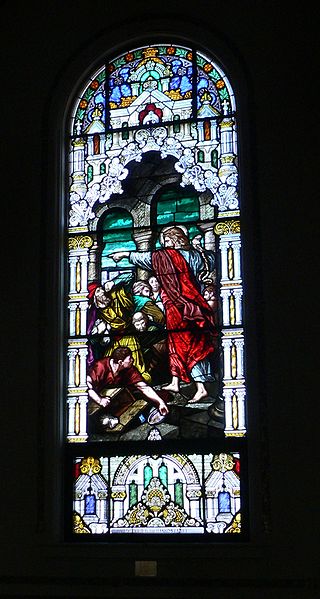 The next requirement of those who are living during the Day of Atonement according to Leviticus 23:27 is to "offer an offering." There was an offering that was offered on behalf of the people on the Day of Atonement.
 There’s something that I do want to emphasize right now— that the Day of Atonement included time for forgiveness. Even on that day the daily sacrifice was offered. So forgiveness was still possible during the Day of Atonement because you had the daily sacrifice like any other day.
Anti-type – Offer Offering
How can we offer an offering today? One thing that we can do is identify what the work of the priest and the offering of Jesus our sacrifice. We are to stop living as if ain’t nobody done nothing for us. Christ has done much for us to offer us forgiveness. But not just forgiveness...forgiveness and cleansing. (1 John 1:9) And it’s about time that we started living as if forgiveness and cleansing were possible and operative as a result of the work of Jesus on our behalf.
Also, Romans 12:1 says: “Therefore, I urge you, brothers, in view of God's mercy, to offer your bodies as living sacrifices, holy and pleasing to God—this is your spiritual act of worship.”
We offer an offering by both identifying what the offering that Christ has done for us as well as offer ourselves a living sacrifice. That’s how we can have this offering mindset in the antitypical day of atonement.
Thursday, August 12, 2010
Audio 55 – Day of Atonement Living
You may have heard that we are living in the Antitypical Day of Atonement, but what difference does that make?
How are we expected to live during this time frame?
Join Elder Cox as he applies the requirements of the congregation during the ancient Day of Atonement service to those of us who live in this modern age.
Thursday, July 29, 2010
Sanctuary Living - Do No Work
 The people of God were required to refrain from work (have a Sabbath) while the priest was performing his duties in the Sanctuary on the Day of Atonement. This command is found at Leviticus 16:29, 31, Leviticus 23:28, 30, 31. Just like on the 7th day Sabbath, the people of God were to set aside all work. They were to be involved in a total disengagement from the present world. Here the people of God had a special Sabbath to keep. They must set aside their daily regular work. It is a time to place God and the interests of spiritual things in the forefront. To do this, one must totally set aside all other things.
Anti-Type Sanctuary Sabbath
Now in the anti-typical Day of Atonement, we cannot totally and fully rest from all work, but there is something in this command that is of interest. First, at this time, we note that there is a predicted revival of the Sabbath in Isaiah 58. This predicted revival of the Sabbath is also alluded to in Revelation 14:7 as the fourth commandment (Sabbath) is quoted. During the Day of Atonement, we have a revival of Sabbath interest and we as Sabbatarians have the job of preaching and teaching this important truth in these last days.
But more than that, Hebrews 4 reminds us that the Sabbath rest must be totally and completely internalized in the Christian. We are to have a life of Rest. A life where we rest in the work of Christ on our behalf.
Finally, we live all of our days placing God and eternal interests at the top of all that we do. As our heavenly High Priest does His important work in the Sanctuary above, let us live so that we will not be overtaken by the cares of this life, but place God above all things (Luke 21:34-36). Let us have a Sabbath Reform that is informed by the Sanctuary service.
Thursday, July 22, 2010
Holy Convocation in Sanctuary Living
 What difference does the sanctuary make for our daily living? Often the question is asked, "Is it True?" However, this question of relevance is often the unasked (and sometimes asked) question. In the next series of posts, I want to look at the question from the standpoint of what the Day of Atonement meant to those who lived during the typical Sanctuary service.
There were a number of things that the members of the congregation had to do on the ancient Day of Atonement. The first of these responsibilities that we will discuss is the call for a holy convocation. This is found in Leviticus 23:27.
Come For Holy Gathering in Sanctuary
Here the people of God had to come to the Sanctuary for a holy gathering (convocation). Here the people of God came to be in tune with the priest who was doing this great work.
The people did not just come without thinking of the importance of the day. They knew that this was a solemn service where their eternal interests were vitally at stake.
Likewise, those of us who find ourselves in this anti-typical "Day of Atonement Period" should seek to do the same thing. While it is not possible for us to go to the heavenlies to actually participate in a group meeting up there, we can do a few things on this earth to show our solidarity with the heavenly high priest and his great work on our behalf.
Come to The Heavenly Sanctuary
First, we can go by faith into the heavenly sanctuary. The Bible says to "Boldly come to the throne of Grace." (Hebrews 4:16) We come to the heavenly sanctuary as we think about and identify with the great work that our high priest is doing up there. We come to the gathering as we make the work that is being done there the center of our thoughts. Just as the cross should be at the center of our thoughts, so should the work of Christ in the heavenly sanctuary occupy our thoughts and minds.
Meet With Other Believers
Second, we can have this holy gathering as we meet with other believers who have this heavenly view in mind. The Bible says to not neglect the gathering of ourselves together, Hebrews 10:25)\. We must come together in our holy gatherings down here as we look to the great work up there.
To do this, we are to learn of Christ as our High Priest. We are to learn of what Christ is accomplishing now. We are to cooperate with that great work that Christ is doing. And finally, we are to gather with one another as we all look to that great work that Jesus is bringing to culmination in the Sanctuary in heaven.
Thursday, July 15, 2010
Dr. Calvin Rock and Reform in Adventist Preaching
[caption id="attachment_2347" align="alignright" width="175" caption="Adventist Co-Founder James White"]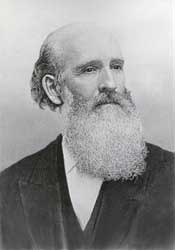 [/caption]Dr. Calvin Rock wrote about the content and purpose of Adventist Preaching in his influential Ministry Article of September 2000 entitled "Black SDA Preaching Betwixt and Between." We have looked at that article periodically on the website and will look at it again. This time we look at it for his definition of Adventist preaching.
He writes:
There are a few things that are interesting about this quote. First it makes "reform" that upon which our preaching rests. It is not simply about preaching truth. Certainly it includes preaching truth, but it is a certain kind of truth. It seeks to preach an end time message. It seeks to preach getting better. It seeks to prepare a world. All of these things require change. And it is to us as Adventist preachers to proclaim these truths.
So we preach "present" truth. This is a truth that is needed right now. We teach truth that reforms and calls the hearer to a better way of living. Finally it has at its base that which we agree with others as well as that which has been given to us to teach for we preach the gospel through the symbols of the Sanctuary as we uphold the Law of God while keeping ahold of the prophetic gift. But we must never forget the truth of justification by faith.
[/caption]Dr. Calvin Rock wrote about the content and purpose of Adventist Preaching in his influential Ministry Article of September 2000 entitled "Black SDA Preaching Betwixt and Between." We have looked at that article periodically on the website and will look at it again. This time we look at it for his definition of Adventist preaching.He writes:
Adventist preaching...essence is clearly one of reform---Sabbath reform, health reform, family reform, stewardship reform, etc. Preaching that does not ring with the certainties of Daniel and Revelation; that is not flavored with the symbols of the sanctuary; that does not uphold the law of God; that does not honor the prophetic gift of Ellen white; that does not extol justification by faith is not Adventist preaching. It may be truth, but it is not Present Truth; it may constitute an engaging performance, but it does not constitute the remnant proclamation.
There are a few things that are interesting about this quote. First it makes "reform" that upon which our preaching rests. It is not simply about preaching truth. Certainly it includes preaching truth, but it is a certain kind of truth. It seeks to preach an end time message. It seeks to preach getting better. It seeks to prepare a world. All of these things require change. And it is to us as Adventist preachers to proclaim these truths.
So we preach "present" truth. This is a truth that is needed right now. We teach truth that reforms and calls the hearer to a better way of living. Finally it has at its base that which we agree with others as well as that which has been given to us to teach for we preach the gospel through the symbols of the Sanctuary as we uphold the Law of God while keeping ahold of the prophetic gift. But we must never forget the truth of justification by faith.
Saturday, July 10, 2010
If You Can, You Must Do...The Church Needs You
 Ellen White makes an interesting statement on page 85 of the book Counsels to Writers and Editors. In it she says: "It is the duty of all who can write, especially those who minister in holy things, to exercise their talents in this direction."
Here Sister White encourages all to write if God has given you that talent. we have come to a point where we need an all hands on deck mentality. We cannot wait for an assignment from our oveworked pastor or conference official. We cannot wait until someone gives us a test to inform us of our abilities. We cannot wait until someone in church office resigns or retires opening the door for us. No we are to find what we can do, and do it with all of our might and strength.
Today, we are in an era where the power of the author has been magnified. If you can write you can reach literally millions very quickly. Ellen White spoke about our publications going out like the leaves of autumn, but I wonder if she would even be surprised at the power that the web has given to all of us.
But more than the writer. There are other talents in the church that we have not given to the Master. There are computer professionals who have some time while the church's web presense languishes. There are teachers who could be holding GED programs or the like. There are health instructors who could be focusing on the "right arm of the message." There are pleasant people who could be giving much needed ministries of encouragement. There are people with Biblical knowledge who could be giving Bible studies and readings. If you want to see an explosion...just think what would happen if those of us who have been given talents had the audacity to use them for the mission of Christ in the world. It would literally "turn the world upside down."
The church needs you. If you are waiting for an assignment, then Jesus gave it to you when he said "Go ye therefore and teach all nations..." "Ye" means me and it means you. If you need an ordination, then you got that at baptism. If you need a position, then you got that cause you been called an ambassador of God.
In short, if you can...Go head on and Do....The Body of Christ needs it...And we need it right now!
Church Hopper or Minister
[caption id="attachment_2337" align="alignleft" width="300" caption="Photo by Marco Gomes"] [/caption]I recently heard a preacher preach about a common phenomenon in all of Christiandom, the church hopper.
What is a church hopper? It is one who simply moves from church to church following the next big "high." When a new exciting pastor comes to town, they go join it. We often see this when a Mega Church grows at the expense of many smaller churches. In the city in which I live, I have seen some jump from church to church as pastors come and go. One very dynamic preacher left town and the migration to another powerful speaker started. Then a new preacher came to town and now the "place to be" moved to that new locale.
However, sometimes a church hopper moves to a new church for added responsibility. Sometimes a church hopper comes to a new church because the leader of the new church has inspired action that gives added spiritual growth and ultimately a stronger witess in the community and the world. Sometimes church hopping may strengthen the member. Sometimes God may even call you to move to another church and the community is strengthened. Sometimes church hopping can be a blessing.
However, much of the time people church hop not to be involved in the church community or to be stronger witnesses in the larger commuinity, but to find better religous entertainment to consume. That entertainment may be preaching, singing, or programs put on by the church.
But then there are other hoppers who have been displaced or run off by new leadership. Sometimes when a new pastor comes to town current leadership of a church takes the time to move on. Other times pastors move some current leadership out. Some pastors displace the leadership in a church when they come into a church. These people have been sat down by the pastor for whatever reason. Sometimes the pastor has a valid reason for setting them down, sometimes they don't.
The preacher's main point is that none of these really increase the number of Adventists. Neither does it really increase the amount of people who have heard the message we have been called to preach. Tithe may increase at that local congregation, attendance may increase locally, but church hopping does not normally increase the number of Adventist members in the city.
Why are we here and what are we to do? If we are here to "preach the Gospel of the kingdom for a witness to all the world." Then it is time to judge our ministries and our work by whether it is providing a witness in the world and whether we are warning the world of the coming crisis. It is time for us to stop acting as if church is solely about our needs and our entertainment and recognize the responsibility of church membership and Get in the game. It is time for all members to move into that category of member that is not just an attender but a minister.
 [/caption]I recently heard a preacher preach about a common phenomenon in all of Christiandom, the church hopper.
What is a church hopper? It is one who simply moves from church to church following the next big "high." When a new exciting pastor comes to town, they go join it. We often see this when a Mega Church grows at the expense of many smaller churches. In the city in which I live, I have seen some jump from church to church as pastors come and go. One very dynamic preacher left town and the migration to another powerful speaker started. Then a new preacher came to town and now the "place to be" moved to that new locale.
However, sometimes a church hopper moves to a new church for added responsibility. Sometimes a church hopper comes to a new church because the leader of the new church has inspired action that gives added spiritual growth and ultimately a stronger witess in the community and the world. Sometimes church hopping may strengthen the member. Sometimes God may even call you to move to another church and the community is strengthened. Sometimes church hopping can be a blessing.
However, much of the time people church hop not to be involved in the church community or to be stronger witnesses in the larger commuinity, but to find better religous entertainment to consume. That entertainment may be preaching, singing, or programs put on by the church.
But then there are other hoppers who have been displaced or run off by new leadership. Sometimes when a new pastor comes to town current leadership of a church takes the time to move on. Other times pastors move some current leadership out. Some pastors displace the leadership in a church when they come into a church. These people have been sat down by the pastor for whatever reason. Sometimes the pastor has a valid reason for setting them down, sometimes they don't.
The preacher's main point is that none of these really increase the number of Adventists. Neither does it really increase the amount of people who have heard the message we have been called to preach. Tithe may increase at that local congregation, attendance may increase locally, but church hopping does not normally increase the number of Adventist members in the city.
Why are we here and what are we to do? If we are here to "preach the Gospel of the kingdom for a witness to all the world." Then it is time to judge our ministries and our work by whether it is providing a witness in the world and whether we are warning the world of the coming crisis. It is time for us to stop acting as if church is solely about our needs and our entertainment and recognize the responsibility of church membership and Get in the game. It is time for all members to move into that category of member that is not just an attender but a minister.
Friday, July 2, 2010
All Eyes on Atlanta – Ted N. C. Wilson To Address Church On Sabbath – What I Want To Hear
 New General Conference president Ted N. C. Wilson will address the world church this sabbath in perhaps his most listened to sermon to date. This has been an interesting election for a number of reasons. I hear some jubilant voices who have almost a "we won" tone.
 Then there are those who are fearful of what they think may be a retreat to an earlier era that they fear will not work in today's world. These argue that Adventism must be a "big tent" where anyone can become a member regardless of their views on evolution.
As I look at this sermon this weekend, I will be listening to echos of Gospel. I will want to hear a word of forgiveness and power that comes to us by the power of Jesus Christ. In short, I hope to hear about why I am a Christian.
In addition, I want to hear echoes of our peculiar movement. I want to hear a reminder of the role and the importance of this movement specifically. It is too easy to forget that there is an assignment given to this movement, and I hope that we will hear a word of that. In short, I hope to hear about why we are Adventist.
I also want to hear about the plans for the forward progress through mission. I hope to hear not a reheated fossilized message that does not address the needs of today, neither do I hope to hear untested conjectures that may not work.
Finally, I want to be inspired by its connection to the Holy Ghost. I don't want to just hear truth, I want to hear inspired present truth.
Remind us that we are Christian, remind us that we are Adventist, inspire us to God's mission in the world by a connection to the Holy Spirit. And then the people will be ready for 5 more years of work, toil, and life in this world, "should Jesus delay his coming."
Monday, June 21, 2010
Further Thoughts On Restructure of Our Divisions
 This union of churches idea is interesting to me. It appears as though it simply eliminates the conference level and with it a lot of expense. There definitely seems to be an upside with what looks like a lot of cost savings.
However, I wonder about the ramifications of such a move. Will such a move effectively eliminate the voice of the layperson from directing the church. I mean now, the conference is elected by lay people and the workers in a conference. However, will eliminating the conference level leave those lay people, and workers who are not politically powerful, from the table of decision making? Is such a move the best?
It is true that the discussions and decisions have to be made on how this will work, but I do wonder about whether the average pastor and average lay person will have as much say in the leading of these Union of Churches and in the leading of their local conference.
For that reason alone, I wonder if the elimination of the Union level might be brought to the table as a cost saving device as well. How many of us even interact with out union officials. We do see the conference officials often, but the union? Division, GC?
I'm all for monetary savings and am not philosophically against restructure, but I do think we need to be very careful about how we consolidate power. If done in the wrong way, we will never be able to get it back.
Thursday, June 17, 2010
The Conference Level And Re-Structure At General Conference 2010
 I thought it interesting that the last Adventist News Network is reporting that
The revised Church Manual also introduces a glossary of frequently used terms, including a definition of "union of churches," a church governance structure in which a group of local congregations reports directly to a union, eliminating the conference or mission level of administration. Delegates will approve several recently formed unions of churches at Session, as well as consider whether to expand the structure's use.
As Samuele Thomas Sr. used to say when he preached..."Did you Get it? or Did You Miss it?"
Eliminating the Conference Level
Yes there seems to be talk about eliminating the conference level altogether. Now if you are a loyal reader of SabbathPulpit.Com, this would not have taken you by surprise. We talked about this four years ago in 2006. I discussed Harold Lee's article on this page.
I talked about the annual council when this came up at this link. That article also has a pdf document of the different proposals for structural change.
In this article, I looked at 5 different options talked about in that document.
Finally, I talked about what structural change might mean for the regional (black) conferences at this link.
Well, it is here folks. There will be discussion about a so-called "union of Churches" which is simply a union conference. There is talk about eliminating the conference level.
Can We Afford Both Levels?
To be honest, I think that we can no longer afford nor do we need both the local conference and the union conference levels. It is a throwback to an earlier era. My only concern is that the members of the local church still retain its ability to affect and vote for its local leadership whether that be a "Union of Churches" or a "Conference." This re-structuring cannot be a way to remove the ability of the member to participiate in the choosing of the direction of the local church and the level right above the local church.
But after having said that, there is a lot of duplicate leaders and offices that really need trimming. I mean do we really need a religious liberty director at the conference level? Don't all the hard cases go up to the Union anyway? Do we really need the local conference Sabbath School leader? And if we do need both of them, how about a union leader and his staff, and then a conference leader and a regional conference leader if it is in the east. No we need restructuring.
I Hope This Is Not Simply A Power Grab
I suspect a lot of tentative decisions and discussions have taken place on this subject. It is my only hope that whatever happens, it will not amount to simply a power-grab by a few leaders, but it will be a principled decision for the good of our World Church by people at all levels of the church including the local conference and local church levels.
The Adventist Basics In Adventist Preaching
 You know those who play Jazz music know of a concept of "standards." These are the basic songs that you must know if you are to be an acceptable musician. They consist of old tried and true songs that have been passed down from generation to generation of musicians. Musicians don't have to play it in exactly the same way, but they must know the "tunes" and be able to play them when called upon.
The last few months, I have been looking at some old sermon material that my father has showed me. Specifically they are the very old book Public Evangelism by J. L. Shuler published in 1939. In addition there is the book Evangelistic Methods: Step by Step by Fordyce Datamore published in 1957. And then there is God Made An Evangelist by E. E. Cleveland published in 1994.
These books primarily are "Evangelistic" sermons and methods for doing evangelism. Many of the principles are still being used, although modified, by evangelists today. There are a lot of things of interest in these materials to me, a seminary trained homilititian, and we will discuss these over time on the website.
Basic Sermons Passed Down
But one thing that was striking is the consistency of the sermons in the books. There were a number of basic sermons that seemed to be passed down from generation to generation of Adventist Evangelist. There were a few new sermons or different sermons, but in general they were the same sermons with only a change in sermon title and/or illustrations. Shuler even suggests that the great Adventist Evangelist should be always on the lookout to have modern and appropriate titles to "speak on the old-time truths of the message."
Shuler's Daniel 2 sermon was titled The Fate of Europe. This became simply titled "Daniel 2" by Datamore. Finally Cleveland gave it "The Great Prophetic Metal Man. Does He Live Today?" Shuler added other possible titles as "Seven Words That Changed History." Those words were "They shall not cleave one to another." And so on with other sermons like the Second Coming, Millennium, and State of the Dead.
Of particular interest was the Sabbath. Here evangelists would use titles like "What Day Should Christian's Keep" and "The Missing Text" which goes through all the texts that refer to Sunday in the Bible. These sermons took on titles like Mary's Mother's Birthday and "The Father Didn't, The Son Wouldn't, The Apostles Couldn't. Who Did."
What is interesting though is that while the titles changed, the basic idea behind each of these sermon/lectures was a number of texts that would be presented to prove the validity of the claims of the Evangelist. These basic sermons were the "standards" or the "Adventist Basics" of the Adventist Evangelist. (note: Instead of using the term "standards" which has a specific meaning among Adventists, I will use the term "Adventist Basics" for understanding.)
Listen Over And Over Again
Daniel 2 had to be preached under whatever title. Daniel 7 had to be preached as well. The history of the papacy had to be preached. Revelation 12, 13, and 14 as well. These were the "Adventist Basics."
And just like a jazz audience who have heard the standards over and over again, they never tire of hearing them. So the Adventist audience who have heard Daniel 2 wonder how the preacher will present it this time.
But the "standards" or "Adventist Basics" did not just include the books of Daniel and Revelation. In the 16 week meeting the preacher had to preach why the preacher accepts the Bible as the Word of God. There were also sermons on Family life like Cleveland's "Marriage-The Secret to a Happy Home Life." In addition, all of them had sermons on "confession, repentance, and forgiveness."
Building The Framework of Adventism
These basic building block sermons were a solid part of the preaching in tents. They gave a solid foundational understanding of the framework of Adventism. However, in today's world, 16 weeks 6 nights a week will not work. There are just too many nights. That meeting has been truncated to 5 weeks 4 nights a week. And thus many sermons had to be removed. Some of them were the standards. And thus now we are in an interesting position where these sermons that everyone had heard. Whether they agreed with the position or not, they at least have heard them. Now we have generations of Adventists who don't know the "Adventist Basics." They don't know the basic Adventist argumentation. Now these "Adventist Basics" are hidden away in theological texts. Books like "1844 Made Simple" is simply an expansion of a Bible study that every Adventist had heard in the evangelistic meetings. It was an "Adventist Preaching Standard."
I do not think that we can simply go back to the past. Neither do I think that we can or should attempt a 16 week, 6 night a week meeting in 2010, but we have to find a replacement for that meeting that will pass on the "Adventist Basics" to another generation.
Tuesday, June 15, 2010
The Impossibility of Separating Doctrine From Life
 Many Christians separate doctrine from their daily lives. This idea is manifested in the idea of "doctrine is less important than relationship." Some who each this argue that doctrine is good and fine, but a personal, vibrant relationship with Jesus Christ is more important. This is the common way that this is taught. We hear about how Adventists know too much doctrine, but don't know the Man behind the doctrine.
 There is definitely value in reminding people that the Christian walk is not merely a thing of the "head," but it is also a thing of the "heart." I think this is a part of what these sisters and brothers are preaching when they push this idea, but it has the side effect of making people think that a proper and good relationship to God can be obtained devoid of doctrinal understanding. Often little definition is given for this "relationship with Jesus" beyond a comparison to a friendship.
This idea makes doctrine something that is "nice to know." It is not important or even valuable. It is an impediment. What this view misses however is the is a valid definition of doctrine. Doctrine is not esoteric, useless, or irrelevant facts. Doctrine is simply codifying our understanding of God. Certainly it will change as we learn more, but it is simply not possible to not have doctrine. We may have a doctrine we have not thought about much. We may have doctrinal understandings that center in irrelevancy, or we may have doctrinal understandings that focus totally on things that are relevant to daily lives. We simply cannot dispense of doctrine.
While it is true that having a growing connection to the Divine life is more important than merely knowing about the Most High, it is also true that one cannot fully separate our learning about God from our real relationship to God.
In short, if you are growing in your relationship with your wife, would you stop learning about your wife? Will you get to a point that you no longer study to find out what makes her happy? Do you stop learning about her using the tools you have access to? How is that any different from learning all you can about God?
Ultimately it is a false dichotomy. You will not be growing in this "relationship with Jesus" if you have no desire to grow in your knowledge of Jesus Christ (Doctrine). In fact, how can you even know the difference between the false Jesus and the true Jesus unless you have some kind of learning to back it up. I know my wife immediately from her voice, from the way she looks, and from the things she does. How is it that I can be ready for the last day when God will have a people who "follow the lamb withersoever he goest." (Revelation 14:4) If I marginalize or put down the very pursuit of knowledge of what Jesus is doing and will do in this world and in my own life.
In short, the separation of doctrine from life is not a viable position. The true position is to live out your doctrine. Live out your understanding of God. We don't have to choose between putting an ephemeral and undefined "relationship with Jesus" above our understanding of Jesus. Neither do we have to choose to ignore doctrine altogether while glorifying this disconnected idea of "relationship." We can go another road that is a doctrinally informed and lived life that is empowered by a growing relationship with the Most High.
Monday, June 14, 2010
Thinking About Camp Meeting
[caption id="attachment_2252" align="alignleft" width="300" caption="Photo by Boksi"] [/caption]Being a son of an Adventist preacher, I will never forget the camp meetings. We were out there. We were out at the camp when my father and the other workers worked to get the camp in shape for the visitors and members. I can still remember seeing preachers who you normally see gracing pulpits instead cleaning stalls throwing away trash and cleaning kitchens.
I then remember the encampment itself. There were programs for the youth. I still remember the "happy time tent." It was an era when little kids could roam and discover the landscape of our old "Camp Shady Hill."
I remember walking around everywhere. I can remember getting chiggers and mosquito bites. I can remember seeing frogs and other animals as we invaded their teritory. Those were great days.
Then the meetings themselves. Of course you got to hear the other preachers from the conference. You could hear T.A. Mcneally and Butch Rice and the rest of the preachers out there. But then you could also hear the best of the preachers outside of the conference. people like Henry Wright, C. D. Brooks, E. E. Cleveland, and Calvin Rock would come in. Then there would be singers some you have heard of like Walter Artist and some who you may not have heard of although well known out side,
Camp meeting was more than meetings, it was a time to interact with the children of the other workers. Folks who I still remember and many who I even interact with on occassion today. It was a time to become a community. We were a conference. But more than that, it was a time for many, who find themselves at very remote areas, to recognize that there were more Seventh-day people than just the 30 or 40 who meet at their congregaton.
It was a time to be reminded of who we are and why we are here. It was a time to be encouraged that the end is still coming and Jesus is still coming again.
I sometimes wonder what the moving of camp meeting online means for camp meeting. Certainly it is a different era than the era of a 10 year old kid running around "Camp Shady Hill" in the 1970s, but I miss it. Don't get me wrong, I love the ability to turn on camp meeting online. I did it this year. I looked at Kentucky-Tenn, South Central, and 3abn camp meetings online. I love seeing these preachers and musicians sing and preach to the glory of God. I love the lack of heat and travel. In short, I love the convenience.
In an era when camp meeting attendance during the week seems to be going down, one wonders if the one week on an encampment makes sense financially, but I must admit that I will miss it if it goes away. And I will always remember singing and doing crafts at the "happy time tent."
 [/caption]Being a son of an Adventist preacher, I will never forget the camp meetings. We were out there. We were out at the camp when my father and the other workers worked to get the camp in shape for the visitors and members. I can still remember seeing preachers who you normally see gracing pulpits instead cleaning stalls throwing away trash and cleaning kitchens.
I then remember the encampment itself. There were programs for the youth. I still remember the "happy time tent." It was an era when little kids could roam and discover the landscape of our old "Camp Shady Hill."
I remember walking around everywhere. I can remember getting chiggers and mosquito bites. I can remember seeing frogs and other animals as we invaded their teritory. Those were great days.
Then the meetings themselves. Of course you got to hear the other preachers from the conference. You could hear T.A. Mcneally and Butch Rice and the rest of the preachers out there. But then you could also hear the best of the preachers outside of the conference. people like Henry Wright, C. D. Brooks, E. E. Cleveland, and Calvin Rock would come in. Then there would be singers some you have heard of like Walter Artist and some who you may not have heard of although well known out side,
Camp meeting was more than meetings, it was a time to interact with the children of the other workers. Folks who I still remember and many who I even interact with on occassion today. It was a time to become a community. We were a conference. But more than that, it was a time for many, who find themselves at very remote areas, to recognize that there were more Seventh-day people than just the 30 or 40 who meet at their congregaton.
It was a time to be reminded of who we are and why we are here. It was a time to be encouraged that the end is still coming and Jesus is still coming again.
I sometimes wonder what the moving of camp meeting online means for camp meeting. Certainly it is a different era than the era of a 10 year old kid running around "Camp Shady Hill" in the 1970s, but I miss it. Don't get me wrong, I love the ability to turn on camp meeting online. I did it this year. I looked at Kentucky-Tenn, South Central, and 3abn camp meetings online. I love seeing these preachers and musicians sing and preach to the glory of God. I love the lack of heat and travel. In short, I love the convenience.
In an era when camp meeting attendance during the week seems to be going down, one wonders if the one week on an encampment makes sense financially, but I must admit that I will miss it if it goes away. And I will always remember singing and doing crafts at the "happy time tent."
Wednesday, June 2, 2010
TULIP, Calvinism, and The Great Controversy Theme
[caption id="attachment_2229" align="alignleft" width="274" caption="John Calvin"] [/caption]Herbert Douglass, in the book Fork in the Road has written a helpful summary of why Calvinism and Adventism cannot be unified on the idea of what the Gospel means. You may not know it, but Calvinists are the "big wigs" in the evangelical world. From popular scholars like R. C. Sproul to pastors like D. James Kennedy and John McAurthur. Certainly there are some who do not agree with all of the positions of the Calvinistic cause, but many of the popular authors and preachers in the Evangelical world are Calvinists.
The Five Points
By Calvinists, I mean those who hold to the five points of Calvinism, or at least most of the points. This is often referred to as TULIP, In short these are:
Where the System Begins
They begin their system with the idea of God’s sovereignty. God is ultimately in charge and can do anything God wants to do. No one else has freedom. God alone has freedom. Due to total depravity, we cannot chose anything but sin. Thus God must choose those who will be saved and thereby will be choosing those who will be lost. Humanity can not judge God, the saved should be happy that they are among the ones that God has chosen to save.
Adventism’s Starting Point
Adventism begins with the concept of God giving humanity Freedom. We say that God has given the gift of freedom to all of humanity. We get to choose whether we will follow Satan or God’s government. This gift of freedom has been given to the entire universe of beings, according to this idea.
Interestingly God uses this world to demonstrate where Satan’s principles will lead. Thus God chooses to demonstrate the rightness of God's cause in this system.
Finally, God has chosen all of us in his son to eternal life, and those who do not reject God’s rule of love will be saved at last.
In the end, we have one scheme beginning with God’s sovereignty that makes human freedom impossible. On the other end we have humanities freedom as being something given to humanity by a sovereign God. God wants us to choose the righteous government. But the Calvanistic system makes such a choice impossible unless the one has already been predestined to salvation.
Finally, in the Adventist system, God allows Satan’s choice to play out before the entire universe. Freedom of choice is an important component of Adventism while it is impossible under Calvinism.
Can’t Synthesize the Two
While there are certain similarities between the two groups, and both can recognize that one can be saved while agreeing with the other position. But like my Calvinist friend told me after a long conversation, "You may be saved...but you are wrong on this issue." So we see that we can’t synthesize the two views. And why would we want to? Either the Calvinist view is right, or the Adventism view is right, or perhaps logically another option is correct, but all of them are not right. Because of this, it is time for Adventists to stop getting our “understanding of the love of God” from folks who do not accept at all the freedom of humanity which is at the foundation of the Great Controversy that we preach. It is time to decide if we are Adventists or not. If not, then Calvinism might be an acceptable alternative, go ahead and look into it, but if you are going to be Adventist, then it is time to stop running behind the evangelical teachers who have different presuppositions than we have. If we are going to be Adventists, be Adventists.
They Don’t Mix
No Adventism and Calvinism don’t mix. It is time to stop acting as if it does. It is time to stop acting like the contradictions that we are currently spouting are actually “paradoxes.” It is time to stop telling our people that our evangelical friends have Jesus and we have the law, so go to them to get Jesus and come to us to get the law! No! If we ain’t preaching Jesus, then we need to start preaching him in the context of the message that God has given to us. Be not deceived our Calvinist brothers and sisters do have a place for the law, and it is an important place, but it is just not the same place we have for the law and for Jesus in our understanding.
So what is the answer? Maybe it is time to start reading Steps to Christ again instead of Experiencing God. What’s the answer? Using The Great Controversy Theme as a hermeneutical key to interpret everything. Otherwise we will continue to drift wondering why we even exist as a people.
 [/caption]Herbert Douglass, in the book Fork in the Road has written a helpful summary of why Calvinism and Adventism cannot be unified on the idea of what the Gospel means. You may not know it, but Calvinists are the "big wigs" in the evangelical world. From popular scholars like R. C. Sproul to pastors like D. James Kennedy and John McAurthur. Certainly there are some who do not agree with all of the positions of the Calvinistic cause, but many of the popular authors and preachers in the Evangelical world are Calvinists.
The Five Points
By Calvinists, I mean those who hold to the five points of Calvinism, or at least most of the points. This is often referred to as TULIP, In short these are:
- Total Depravity – When humanity sinned it was placed in a position where they can do nothing but sin. It is sometimes called “total inability.”
- Unconditional Election – God unconditionally elected some to be saved.
- Limited Atonement – God only died and provided the atonement for salvation to those who were elected to be saved.
- Irresistible Grace – The grace that saves cannot be resisted by the human being it is given to.
- Perseverance of the Saints – Once you are saved, there is nothing that can remove you from that saved condition.
Where the System Begins
They begin their system with the idea of God’s sovereignty. God is ultimately in charge and can do anything God wants to do. No one else has freedom. God alone has freedom. Due to total depravity, we cannot chose anything but sin. Thus God must choose those who will be saved and thereby will be choosing those who will be lost. Humanity can not judge God, the saved should be happy that they are among the ones that God has chosen to save.
Adventism’s Starting Point
Adventism begins with the concept of God giving humanity Freedom. We say that God has given the gift of freedom to all of humanity. We get to choose whether we will follow Satan or God’s government. This gift of freedom has been given to the entire universe of beings, according to this idea.
Interestingly God uses this world to demonstrate where Satan’s principles will lead. Thus God chooses to demonstrate the rightness of God's cause in this system.
Finally, God has chosen all of us in his son to eternal life, and those who do not reject God’s rule of love will be saved at last.
In the end, we have one scheme beginning with God’s sovereignty that makes human freedom impossible. On the other end we have humanities freedom as being something given to humanity by a sovereign God. God wants us to choose the righteous government. But the Calvanistic system makes such a choice impossible unless the one has already been predestined to salvation.
Finally, in the Adventist system, God allows Satan’s choice to play out before the entire universe. Freedom of choice is an important component of Adventism while it is impossible under Calvinism.
Can’t Synthesize the Two
While there are certain similarities between the two groups, and both can recognize that one can be saved while agreeing with the other position. But like my Calvinist friend told me after a long conversation, "You may be saved...but you are wrong on this issue." So we see that we can’t synthesize the two views. And why would we want to? Either the Calvinist view is right, or the Adventism view is right, or perhaps logically another option is correct, but all of them are not right. Because of this, it is time for Adventists to stop getting our “understanding of the love of God” from folks who do not accept at all the freedom of humanity which is at the foundation of the Great Controversy that we preach. It is time to decide if we are Adventists or not. If not, then Calvinism might be an acceptable alternative, go ahead and look into it, but if you are going to be Adventist, then it is time to stop running behind the evangelical teachers who have different presuppositions than we have. If we are going to be Adventists, be Adventists.
They Don’t Mix
No Adventism and Calvinism don’t mix. It is time to stop acting as if it does. It is time to stop acting like the contradictions that we are currently spouting are actually “paradoxes.” It is time to stop telling our people that our evangelical friends have Jesus and we have the law, so go to them to get Jesus and come to us to get the law! No! If we ain’t preaching Jesus, then we need to start preaching him in the context of the message that God has given to us. Be not deceived our Calvinist brothers and sisters do have a place for the law, and it is an important place, but it is just not the same place we have for the law and for Jesus in our understanding.
So what is the answer? Maybe it is time to start reading Steps to Christ again instead of Experiencing God. What’s the answer? Using The Great Controversy Theme as a hermeneutical key to interpret everything. Otherwise we will continue to drift wondering why we even exist as a people.
Monday, May 10, 2010
Adventist Television Reflections
 I must admit that I haven't looked at much Adventist television. It had been maybe 10 years ago since the last time I had looked at 3ABN and I hadn't gone back. At that time it seemed to be a haven of poorly produced traditional preachers preaching about historic themes. It appears as though the programming has been divesified into more than just preaching and the quality of the programs look and feel a bit better. But I havne't looked a lot at 3abn maybe I will...
Well recently I began looking at the Hope Channel. I always saw that Hope Channel as the official response to 3ABN. Less rough around the edges and more "mainstream." So I looked at it and saw a number of programs.
There is a program where they simply talk to various singers in Adventism. It really reminds me of a "TBN Praise the Lord"-Like program with only the singing. Then Elder Don Schneider of the NAD comes with his program that seems to be the talking portion of the "TBN Praise the Lord-like" program. This seems to emphasize what particular Adventists are doing that affect the world. There is no studio audience like on "Praise the Lord." Sometimes the studio audience feels contrived especially with the applauding every couple words, but it does at times provide a give and take that can be helpful. I do at times miss the genuine moments of spontaneous celebration of the Goodness of Jesus. But that's not a big deal.
There is also a weekly Revelation Seminar-like program hosted by Jon Paulien and Graeme Bradford. They are looking at the big picture of the Book in what feels like it may be a "scaled down" seminary course. Paulien talks about the book from its big picture "Chaistic" structure that you can see in such books as the Daniel and Revelation Committee Series. I say it is "Revelation Seminar-like" but it really does feel like professors are teaching rather than evangelists. What I mean is that they are much more careful with their language than many preachers. They definitely present their conclusions in much the same way, but they are more guarded and precise in their language.
The Sabbath School presentations are also interesting. There is the small 4 person Sabbath School U that takes students from Andrews and its seminary and lets them discuss the weekly lesson. Added to that is the much larger Hope Sabbath School with Pastor Derek Morris. Morris class is in the traditional vein of a teacher in front of a group although he does make a strong effort to involve the group. It appears that there are around 20 in that group. These programs really are like the various Bible Study programs that you can find on Christian television. Although what is different about this is that you have a group rather than one individual.
Surprisingly I even saw a "Gaither Family-like" group singing. You know where Bill Gaither brings a large group of Christian singers together to sing songs. I gotta admit I love those programs. I love all kinds of Gospel music especially the country gospel that is usually emphasized in those Gaither programs. I must admit that I also really zero in when Whintley Phipps or T. Marshall Kelly sing on there. Well I was surprised to see a Gaither like singing with Adventist singers on the Hope Channel. The signing felt like there was a "damper" on it. There was a more somber tone throughout much of it. But be that as it may, I, being a life-long Adventist, couldn't allow the novelty to pass without checking it out.
All in all I like Hope channel. I suspect that it was designed for folks like me. Because fo that, I do understand those who say that this is geared towards Adventists though. At best it is geared to those who like to watch Trinity Broadcasting Network (TBN) which I must admit I look at as well. Hey I even catch a sermon on the Word network from time to time. So while there are programs that may appeal to that community, there are other programs that are designed specifically for our community like the very good documentary program on Ellen White.
The picture of Adventism presented does feel "user friendly." I think that it is solidly in line with the fundamental beliefs, so you may still hear such terms as "Babylon" or "remnant," but these terms are carefully defined when they are used. I get the feeling that our "inside language" is limited as well.
There may be a bit for the unchurched like the Loma Linda Program that feels like it was produced for the "health channel" in a reality-show like atmosphere. But there is not really a ton for that group, but to be honest, such programming would probably have to be a totally different network. For example, I doubt many "unchurched" people are watching TBN or many other Christian Television programs. But that is just my thoughts and I could be wrong.
At any rate, there must be a moment when the church can give information to its members. This is a great vehicle for that. However, in the end, this is only part of our goal. We still have need for active work outside of our homes. If our televisions cause us to become more and more sequestered then it is a problem whether we are watching Hope, TBN, Word, or CNN.
In the end, Hope seems to be a vehicle to give information and entertainment to a segment of the Adventist population. A secondary goal may be to provide a humane picture of Adventists studying the Bible and singing songs and doing mission work to the outside world. It appears to do both of those jobs pretty well.
Tuesday, May 4, 2010
Package of Beliefs or Mindset
 Is Adventism primarily a package of beliefs or a mindset? It would seem that the dominate view is that it is simply a package of beliefs. These beliefs are either important or not so important or kind of important depending on who you ask. This package includes the sanctuary, state of the dead, and Sabbath. Some lament the objective fact that many are no longer preaching sermons on these doctrines. However, when you dig a little deeper and ask them what kind of sermon they are referring to, it seems as though they mean sermons that didactically defend or teach these doctrines.
While it is true that there is a time to hear these doctrines defined and defended, I question whether the 11:00 service Sabbath morning is that best time. No wonder people got turned off on these doctrines. They may have simply heard them taught over and over again until they assumed that all know them. I mean do we really need a sermon every week (or every other week) that simply delineates why a doctrine is true?
The key thing that is missing in this analysis however is that Adventism is more than a package of beliefs, it is a mindset. The Sabbath flows from that mindset. The Sanctuary doctrine was once an organizing principle that helped to describe the mindset. Our great problem is not that we don't hear any sermons calculating 1844 anymore. Our great problem is that there is no underlying "Adventist" mindset through which we preach any of our sermons. In short, if T.D. Jakes preaches a sermon on the Goodness of God, that does not mean Adventists should not preach a sermon on the same subject. Adventists must preach sermons on the same subject. My contention, however, is that when an Adventist preaches that sermon it will include aspects, views, insights, and even definitions of "goodness" that come from our interaction with Sabbath, Sanctuary, Bible Wholeness, and yes the Third Angel's Message.
We don't need a regurgitation of a package of beliefs that no one sees having any relevance to daily living. We need a deeper understanding of who we are that will affect any sermon we preach. Even, yes, on those occasions when we preach from the package of beliefs.
Thursday, April 29, 2010
Adventists and Pollution
 Pollution is an interesting issue among Adventists. I have heard preachers downplay the importance of taking care of the environment for, they argue, "God is going to clean up everything at the Second Advent anyway." This attitude seems to be to promote disobedience to God who gave us care over this world. Just as we would not eat anything and destroy our bodies for "God is going to clean up everything at the Second Advent" neither should we cavalierly ignore the cry for a better environment.
Interestingly enough, a youtube channel entitled "Adventists About Life" have discussed this very topic. Here is the video. Dr. Allen Handysides argues "Do We Care? I care, for this is God's world and it wasn't meant to be polluted by plastics."
Subscribe to:
Posts (Atom)