Showing posts with label Sanctuary Studies. Show all posts

Friday, August 20, 2010

Sanctuary Living - Offer An Offering

The next requirement of those who are living during the Day of Atonement according to Leviticus 23:27 is to "offer an offering." There was an offering that was offered on behalf of the people on the Day of Atonement.

There’s something that I do want to emphasize right now— that the Day of Atonement included time for forgiveness. Even on that day the daily sacrifice was offered. So forgiveness was still possible during the Day of Atonement because you had the daily sacrifice like any other day.

Anti-type – Offer Offering

How can we offer an offering today? One thing that we can do is identify what the work of the priest and the offering of Jesus our sacrifice. We are to stop living as if ain’t nobody done nothing for us. Christ has done much for us to offer us forgiveness. But not just forgiveness...forgiveness and cleansing. (1 John 1:9) And it’s about time that we started living as if forgiveness and cleansing were possible and operative as a result of the work of Jesus on our behalf.

Also, Romans 12:1 says: “Therefore, I urge you, brothers, in view of God's mercy, to offer your bodies as living sacrifices, holy and pleasing to God—this is your spiritual act of worship.”

We offer an offering by both identifying what the offering that Christ has done for us as well as offer ourselves a living sacrifice. That’s how we can have this offering mindset in the antitypical day of atonement.

Thursday, August 12, 2010

Audio 55 – Day of Atonement Living


You may have heard that we are living in the Antitypical Day of Atonement, but what difference does that make?

How are we expected to live during this time frame?

Join Elder Cox as he applies the requirements of the congregation during the ancient Day of Atonement service to those of us who live in this modern age.

Thursday, July 22, 2010

Holy Convocation in Sanctuary Living

What difference does the sanctuary make for our daily living? Often the question is asked, "Is it True?" However, this question of relevance is often the unasked (and sometimes asked) question. In the next series of posts, I want to look at the question from the standpoint of what the Day of Atonement meant to those who lived during the typical Sanctuary service.

There were a number of things that the members of the congregation had to do on the ancient Day of Atonement. The first of these responsibilities that we will discuss is the call for a holy convocation. This is found in Leviticus 23:27.

Come For Holy Gathering in Sanctuary


Here the people of God had to come to the Sanctuary for a holy gathering (convocation). Here the people of God came to be in tune with the priest who was doing this great work.

The people did not just come without thinking of the importance of the day. They knew that this was a solemn service where their eternal interests were vitally at stake.

Likewise, those of us who find ourselves in this anti-typical "Day of Atonement Period" should seek to do the same thing. While it is not possible for us to go to the heavenlies to actually participate in a group meeting up there, we can do a few things on this earth to show our solidarity with the heavenly high priest and his great work on our behalf.

Come to The Heavenly Sanctuary


First, we can go by faith into the heavenly sanctuary. The Bible says to "Boldly come to the throne of Grace." (Hebrews 4:16) We come to the heavenly sanctuary as we think about and identify with the great work that our high priest is doing up there. We come to the gathering as we make the work that is being done there the center of our thoughts. Just as the cross should be at the center of our thoughts, so should the work of Christ in the heavenly sanctuary occupy our thoughts and minds.

Meet With Other Believers


Second, we can have this holy gathering as we meet with other believers who have this heavenly view in mind. The Bible says to not neglect the gathering of ourselves together, Hebrews 10:25)\. We must come together in our holy gatherings down here as we look to the great work up there.

To do this, we are to learn of Christ as our High Priest. We are to learn of what Christ is accomplishing now. We are to cooperate with that great work that Christ is doing. And finally, we are to gather with one another as we all look to that great work that Jesus is bringing to culmination in the Sanctuary in heaven.

Sunday, December 20, 2009

Audio 52 - Help From High Priest

lifelineChrist is our High Priest. From that position, Christ provides much help especially to one who is in the depths of temptation.

In this audio, Elder Cox, gives an overview of this help that we receive from our Heavenly High Priest.

Wednesday, November 25, 2009

The Lost Art of Restitution

paymoneyIt is interesting that Christianity has become more and more a "individual" thing between me and God.   This mindset causes us to ignore the command to "neglect not the assembling of ourselves together."  (Hebrews 10:35)  We come more and more to the selfish conclusion that I don't need to be among others, not realizign the need to help and encourage others as this scripture states.

Another way that this individualization of Christianity has affected us is that when we sin against someone, we have no problems asking God for forgiveness.  We go ask God to forgive us of our sin, but how often do we go ask the one who we have wronged forgiveness?  And even more than that, how often do we restore that which we have done wrong?

The ancient Hebrew Trespass Offering is illustrative here.  Numbers 5:6, 7 tells us that when the sinner sinnned that sinner would confess to God.  this is an important step.   But there are other steps.

Then the sinner would make restitution.  In Numbers 5:7 it tells us that they not only restored but added interest to that restoration.  This shows how serious the penetent is about forgiveness.  It shows whether it is just a sham or whether it is real.  When you have wronged someone, the Biblical imperative is that you must make that wrong right.  You are not off the hook simply by asking God to forgive and going on.

Then The sinner would bring a sacrifice as written in Leveticus 6:6.  Finally the priest would then secure an atonement for forgivness for the sinner.  This is in Leviticus 6:7.  Restitution is not a suggestion, neither is it optional, for the penitent sinner restitution was required.

Zacchaeus recognized this when at his conversion he decided to restore fourfold that which he had gotten by sinful behavor.  (Luke 19:8-10).  In the final analysis the depth of our desire for real forgiveness is shown at least partially by our willingness to set right that which we have set wrong.  Will we be agents of God's resoration by reversing the affects as best we can?  Or will God have to use someone else to work this reveral?

Sunday, November 15, 2009

Sanctuary in Revelation

TabernacleAboveOne thing that is interesting about relatively recent Adventist study of the book of Revelation is that they have found and teach the obvious and extensive Sanctuary imagery in the Biblical book.  Such imagery demonstrates that a knowledge of the Sanctuary, as well as much of the Old Testament, is needed to understand the last book of the Bible.

A short thumbnail look at the references is as follows:

In Revelation 1 we see Jesus among the candlesticks.  In Revelation 4 we see the seven lamps of fire.  In Revelation 5 we see Christ as the slain lamb of God.  In Revelation 8 we see an angel offering incense on the alter before the throne.  In revelation 11 we see the temple and the alter being measured.  In Revelation 14 an angel comes out of the temple.  In Revelation 15 the temple is filled with smoke.  In Revelation 16 a loud voice comes out of the temple.  In Revelation 21 there is no temple in the city, for the Lamb is our Temple.

It would seem that an understanding of the Sanctuary and the Temple service is very important and necessary if we are to understand this book.   It definitely seems as though Adventists are at least right in saying that one should extensively place the Sanctuary in one's understanding of this book,  and thus the blessing that comes on those who read the book of Revelation (Revelation 1:3) will apply to those of us who attempt to study the Sanctuary and its implications for our present and future.

Wednesday, March 4, 2009

Too Many 2300 Days Knowing, Vegemeat Eating Legalists?

While listening to much of the discourse in the sermons from many preachers one can come to a few interesting conclusions. First, vegetarianism must somehow be related to a meanspirtedness. In addition, this meanspirited vegetarianism must be rampant in the church. Why would I make this assumption? Well because often in the illustrations it is the vegetarian who is the foil. He is the one that is upsetting the equilibrium and hurting the new Christians who are seeking to follow God but have not grown to the full stature of Christ. Now certainly there is a place for this type of rhetoric. There are some who use vegetarianism as some sort of "get out of hell" card when it was never meant for that kind of thing. However, my problem is that the proper purpose of vegetarianism is hardly ever spoken of. When you hear about it, it is usually the obviously problematic person in the story that the preacher is speaking of.

Sanctuary and Vegetarianism? Anti Christian?


[caption id="attachment_979" align="alignleft" width="300" caption="The Tabernacle"]The Tabernacle[/caption]

The same again with the knowledge of the 2300 days. There are some preachers who never even refer to the 2300 days or the sanctuary message except when saying that a knowledge of it is not necessary for some reason. They may preach that you need to know Jesus more than you know the Sanctuary. OK, I can go along with that to a certain extent, but doesn't the Sanctuary tell us something about who Jesus is and what Jesus is doing? (but i Digress)...The same preacher may preach a story about the person who studies the Sanctuary doesn't have the Love of God. Certainly there are those types of people. But when you never balance this rhetoric with either a proper presentation of the Sanctuary (demonstrating the unavoidable description of Jesus) or a proper role for the doctrine in the Christian life, then we end up with a distorted view that seems to think that these doctrines are almost problematic for Christian living.

Never Placing the Doctrines in Proper Context


Certainly many of these preachers are not saying that explicitly. Many of these preachers don't even mean that at all. However if you only speak of the Sanctuary within the context of the hypocrite and the unloving foil and you never place the Sanctuary in the proper context of a loving Christian experience, then you are in essence teaching that the Sanctuary is a useless appendage. The same with other doctrines and vegetarianism.

Certainly there are some preachers who go to the opposite extreme, and there are some who place all of the doctrines in the context of Biblical Christ-centered Christianity. But in much of the discourse there is a strong undercurrent that seems to imly that the Sanctuary, vegetarianism, and other things that we have been called to teach are actually problematic. In short, if the Sanctuary is not a Christ-centered doctrine, then we either must start teaching it correctly, or openly toss it out, but we cannot continue to badmouth the very doctrines that were given to us to help us understand our purpose in these last days.

Monday, December 29, 2008

Help from our High Priest

When one finds oneself in the depths of a temptation that is almost overpowering. And the enemy assails you, you ask Jesus for help. However when you ask Jesus for help you do it with a few things firmly in mind. First you ask for help knowing that Jesus Understands the plight of your soul for Jesus decided to place himself in the depths of human woe. It would have been an infinite humiliation for Jesus to come as Adam in the garden, but Jesus decided to take on the seed of Abraham so that he could be a merciful and faithful high priest. (Hebrews 2:16-17).


Second you ask for help knowing that Jesus can help you in the problem you are dealing with. But more than taking on the seed of Abraham, Jesus was tempted in all points like as we are yet without sin (Hebrews 4:15). We can say with all assurance that Jesus Understand not just by omniscience, but by experience the depths of temptation for he was tempted and therefore he can be merciful and faithful (Hebrews 2:18).


So when temptation assails us, we can go to Jesus and call out to him. And when we call on Jesus, we can know we have a faithful and merciful High Priest listening. And that High Priest knows exactly how much strength is needed to overcome the temptation. That High Priest knows exactly how much grace we need. And thus we can boldy come to the throne of grace to obtain the mercy (Hebrews 4:16) that our brother (Jesus is not ashamed to call us Brethren Hebrews 2:11) will give us. And then after God gives us the grace that is needed to overcome, then Jesus puts on a little more extra grace for where sin abounds, grace much more abounds (Romans 5:20). And then we can sing the song with James Cleveland "Victory Shall be Mine."

Tuesday, December 16, 2008

Sanctuary Message Pitfalls

A few years ago, an elder presented a series of studies on the Sanctuary to a church that I was visiting. In this particular presentation, the elder attempted to provide a synopsis of the Sanctuary message. In that presentation the elder decided to take a "celestial geography" approach to the Sanctuary message and went on and on about each piece of the sanctuary.

The elder described the table of shewbread and said that it represented Jesus as the bread of life. He continued and described the 7 branched candlestick and noted that Jesus was the light of the world. He finally talked about about the ark of the covenant and decided to ask the people if it represented Jesus' or the Father's throne. Finally, a middle aged woman asked a simple question, "What does this have to do with my salvation?" The elder never answered the question. He simply kept talking about arcane facts related to the pieces of the Sanctuary.

Just the Furniture


Most don't even begin to look at the subject, but many of those that do fall into one of a few traps. That elder fell into one of the common pitfalls that make the Sanctuary message irrelevant. Please note, the elder attempted to be "Christ-centered" in that the arcane facts were about Christ, but the message was not connected to humanity in any real way. The elder never tried to answer the question "so what." And then when the woman asked him "so what" he acted like he never even considered the question. Even if you are talking about Christ, you may even consider it to be "Christ Centered," but if it has no importance to daily living it becomes something that may be interesting to my head, but irrelevant for my feet or how I walk....

This is not to say that architecture is irrelevant, however I do question using a presentation on celestial architecture when you are attempting to introduce people to the essentials of that message.

Calculation Only?


Another pitfall that seeks to separate the Sanctuary message from human living is the one that makes it only about a mathematical calculation. There are some preachers who only talk about the sanctuary in terms of mathematics and thus people lose the connection to daily living. I do not wish to diminish the calculation, but simply going to Daniel 7 to demonstrate that the judgment takes place after 1798, and then moving to Daniel 8-9 to find a starting and ending point for the judgment still leaves us questioning "so what."

Judgment Only


Another component that is common is to only teach the judgment. And this judgment takes one of two forms. One is a scary "your name may come up tonight" kind of idea. Here the judgment is something you better be ready or else. Another approach is for the judgment to be an innocuous declaration of our salvation that we should spend no time worrying about. In the innocuous version we have an irrelevant appendage that does nothing for the gospel and in the other we have a fearful "get ready" command without any added help in the getting ready. In both cases we have the help missing.

Cleansing the Missing Component


sanctu1While it was a strong component of our teaching by the pioneers, we have lost the cleansing aspect that was in the type and described in Leviticus 16:30. We have lost the cleansing on earth that is to correspond with the cleansing in the heavens.

Here is relevance. Now some would argue that it is not Biblical. Some may argue that it is not true, but no one will argue that it is irrelevant like the toothless declaration that you are saved only judgment or the mathematical calculation alone.

Conclusion


In short, the Sanctuary Message must be Christ centered, for that is the only place for power, in addition it must retain this connection to humanity, this cleansing of the world in preparation for the second advent of Jesus Christ. The Great High Priest in heaven is seeking to forgive and to cleanse us of all unrighteousness, it is our job to work with Jesus in this great work.

Wednesday, December 3, 2008

Sanctuary Power

May God send you help from the sanctuary...Psalm 20:2

Psalm 20 is a prayer for God to help someone else. The writer states many petitions for the hearer like: May God answer you in your trouble, May God protect you, May God remember all of your offerings, and here, may God help you from the sanctuary. As I think about this the startling conclusion comes that the sanctuary is not normally thought of much at all,and when it is through of, it is not seen in the context of Help coming from there.

Minutia diminishes the Big Picture


I know many members of the Second Advent Movement cringe when an Elder or minister gives a seminar on the Sanctuary. Sometimes it becomes a discussion of the color of the cloth that was used in the ancient service. Sometimes it becomes an intricate discussion of ancient religious choreography that outlines the priest's steps as he performed his duties. Most of us have heard presentations that were simply mathematical calculations that only sought to demonstrate that 1844 was the year on which the "cleansing" found in Daniel 8 began. And finally you may have heard of architectural descriptions of the celestial realities as someone delineates each piece of furniture and its connection to Jesus Christ. Each of these approaches can easily help us lose the forest while looking at trees.

What is the Sanctuary at Core?


While each of those other approaches have their place, we can never lose sight of the fact that deliverance comes from the Sanctuary. Our hope is in the Sanctuary. Salvation is in the Sanctuary. The conclusion of the Great Controversy is delineated in the Sanctuary. The Sanctuary is where God puts together God's plans to lead the earth to its conclusion. So, the next time someone speaks about the Sanctuary or the Sanctuary message, before you think about mathematical calculations, choreography, or architecture, just think about it being the place from which God sends help to God's people and try to understand it within that context. Perhaps then you will have a stronger understanding of the the architecture, choreography, and calculations.

Tuesday, September 2, 2008

We Have Killed the Sanctuary Message

sanctuary255We have killed the Sanctuary Message. We all have contributed to its demise. From the local elder who drones on and on about the color of the tassel the priest was wearing to the pastor who oftentimes just ignores the whole message. From the Bible Teacher who made it merely a mathematical calculation to the lay person who goes to sleep every time it comes up. We have Killed the Sanctuary Message!

We all had a Hand in this


Part of it is the culture that doesn't want to work for anything. We would rather sing "Jesus loves me this I know..." for the rest of our lives than to put forth any effort to provide depth to our religious experience. Part of it is due to the whole tabernacle service being so alien to us. We do not know anything about sacrificing animals and priests representing the people. The sanctuary illustration doesn't make sense to us. Part of it is due to the issues over the years that external and internal theologians, preachers, and Bible teachers have had with parts of the message. Part of it is due to the fact that few seem to be able to give the "cliff note" version of the message which might provide the context to understand the message.

I have been reading the evangelistic messages of some of the great evangelists of our past. One thing that is interesting is that oftentimes the Sanctuary was given to open up the way for the Sabbath. We preached the Sanctuary in heaven where the very Law of God was placed in the throne of God. S. N. Haskell used to use the Sanctuary as his organizing principle for his teaching all of our doctrines. He spoke of everything through this model.

Understanding from the Sanctuary


The simple fact is that we don't know as much as we think we know without referring to the Sanctuary. We cannot understand the "lamb of God that taketh away the sin of the world" (John 1:29) without referring to the tabernacle services. It is problematic to attempt to speak of the "priest after the order of Melchizedek" (Hebrews 5:6) without looking at the sanctuary. And even what we think we know takes on added significance like why and how we can come "come boldly to the throne of grace." (Hebrews 4:16) Without the sanctuary as a model we would miss some of that imagery.

But we have missed it. The Sanctuary message has not been "seeker-sensitive." It is deemed not "relevant" and even called "valueless. Yes we have killed the Sanctuary message, but what is perhaps more interesting than that is that few seem to notice or care.

Can We Survive Without It?


Certainly there are quarters of Adventism where the sanctuary message is all you hear. And the leadership of the church still produces Sanctuary materials from time to time. The Seven Volumes of the Daniel and Revelation Committee definitely seek to affirm the value of the message. The upcoming Sabbath School Lesson makes reference to this subject. In addition, Clifford Goldstein has made a career out of reminding us of the importance of the sanctuary. There are others who teach this as well, but the majority of American Adventists, those who proport to believe the teaching or not, have set it aside for more "pressing" concerns. And there are some parts of Adventism that would tend to celebrate its demise. One can only hope that Ellen White was incorrect when she said that this is one of the pillars of our movement. In addition, when she said that this is one of the principal subjects we should be preaching, we have to hope she was wrong. Because if Sister White is right, we may have seen a part of our foundation leave...And if that is true, what will we do when all that can be shaken will be shaken?

Sunday, August 3, 2008

Two Major Lessons of the Sacrificial System

M. L. Andreasen in his very helpful work The Sanctuary Service discusses two primary lessons that the sacrificial system impressed on the mind of the petitioner. The first lesson is Sin Means Death. We are told this explicitly in Romans 6:23 that the wages of sin is simply death. When we sin we are simply buying death, we are setting in motion a death cycle in our lives. We are simply setting ourselves up for future and sometimes present difficulties. The sacrificial system taught the petitioner clearly that sin means death.


The next thing that Andreasen notes is that sacrificial system taught is that forgiveness of sin requires confession and ministration of blood. Sin requires death, to be saved from sin requires the death of the sacrifice as well as confession of sin.


These two primary lessons were taught to those who offered a sacrifice in the typical service. Sometimes preachers note how difficult it was for those who lived under the Typical system. They "had" to bring a lamb, kill it, etc. Often preachers are attempting to describe the great difference between then and now where we presumably don't have to do any of these things, however, the system lets us know that while we don't kill a lamb, we kill the Lamb of God. While we don't go to Jerusalem, we do by faith go to the heavenly tabernacle where Christ ministers. We can never let the "ease" of our forgiveness hide from us the great cost of our salvation to the Son of God.

Friday, July 25, 2008

Is The Sanctuary Christ Centered

In the book The Andreasen File Compiled by LMN Publishing, M. L. Andreasen talks about a Sabbath School Quarter that promised to be one that presented "Christ-centered doctrines." This is found on pages 100-103. Andreasen was surprised to find that the sanctuary doctrine, the mark of the beast, the 3 angels message, health reform, and other related doctrines were not discussed that quarter. Andreasen wonders if this was done because these are the very doctrines that cause our evangelical brothers and sisters to question our orthodoxy as Christians.

Christ or Adventism?


Over the last few years I have heard some clergy and laypeople calling for a movement away from an emphasis on such things as the Sanctuary or Prophecy to a more "Christ-centered emphasis." While I certainly would have no problem with a Christ-centered approach, in that what else can we as Christians have at our center, I would strongly state that this idea places a false dichotomy. Is there necessarily a distinction between "Christ-centered" and "Adventist fundamental?" The reason why I am writing this is because I had another conversation with a preacher who is finding the present day relevance of the Sanctuary message. He is surprised to find that it is not irrelevant or boring, but a very relevant object lesson of how Salvation and the Great Controversy works. This is in stark contrast to the multiple preachers who think that their goal of preaching the gospel requires minimizing the teachings that make us who we are.

Sanctuary is Christ-Centered


For certainly it is difficult to argue that the sanctuary is not Christ centered. With Chirst being representing as at least the sacrifice, common and high priest, and even the various pieces of the tabernacle. Certainly with Salvation being illustrated in the services of the Sanctuary, it is difficult to make the argument that it is not Christ centered. One could argue that over time some have turned it into a mathematical calculation only, but as sister white reminds us "the sanctuary having a decided relation to the people of God." is one of the landmarks of the movement.

The Real Problem


I think that it is not that these doctrines are less "christ-centered" but that they are more "precise and end-time focused." The Sanctuary reminds us that Christ is doing a work to take care of sin. The Sanctuary reminds us what Christ is doing now. The Sanctuary reminds us that there is a judgment going on. The Sanctuary fits into our "Great Controversy" idea. And all of this is Christ-centered, but what Christ is it?


And here is the issue, you may not agree with the picture it paints of Christ, you may not believe that this picture of Christ is true, but please stop arguing that this doctrine does no have Christ at its center. Take Christ away from the Sanctuary and you have nothing but a shell. However, put Christ back into that heavenly sanctuary and you begin to catch a glimpse of the message that God has ordained that we preach in these final days.

Thursday, March 6, 2008

Audio 34 - Coming to the Throne Boldly


This is an audio Bible Study on Hebrews 4:14-16. Why is it that we can come boldly to the throne of Grace? What do we receive when we come? Come learn about how our Great High Priest has already made a way for us to receive all the Grace we need.


Download the file at this link.

Thursday, February 21, 2008

Our Duty During the Day of Atonement

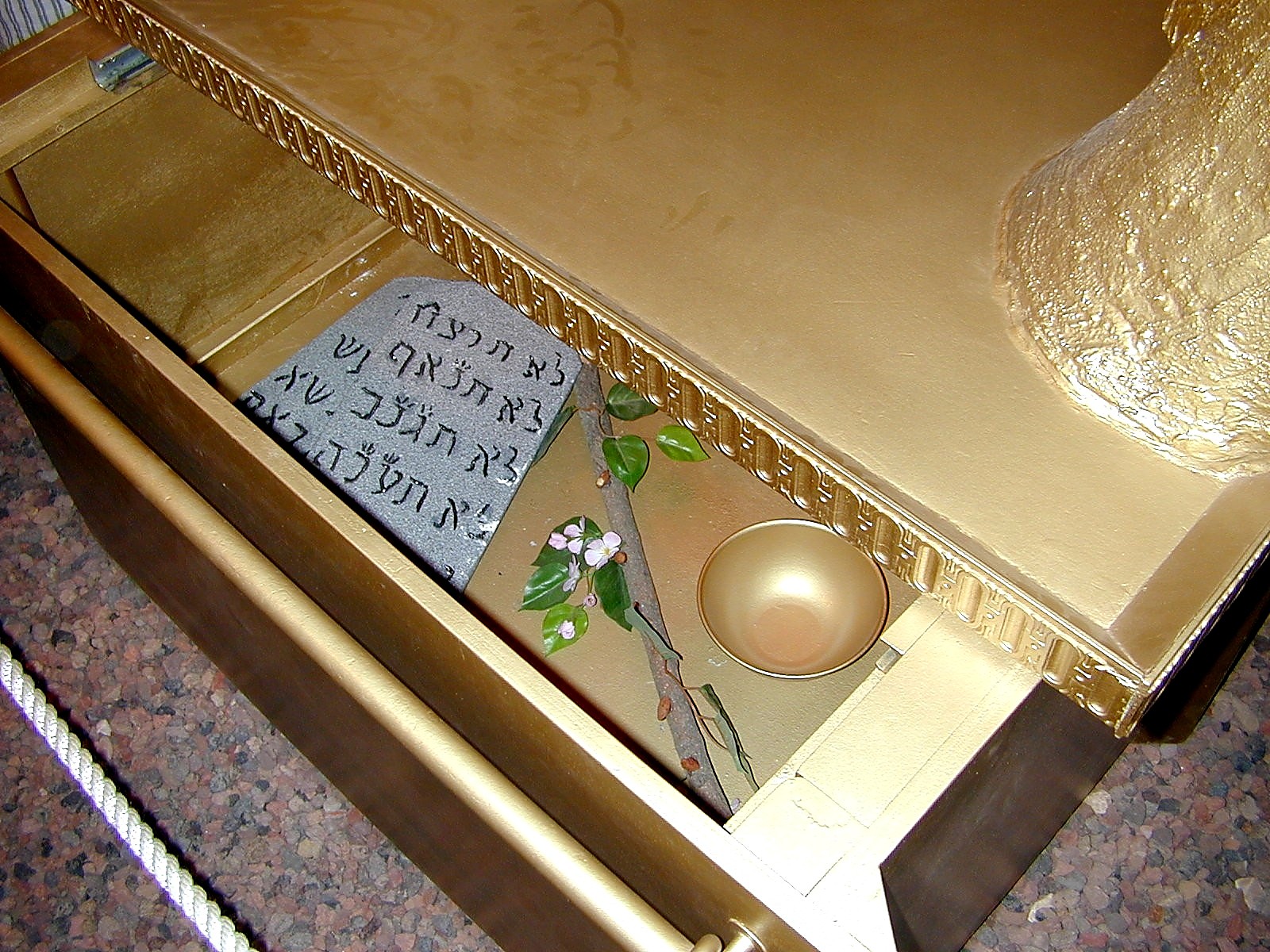
Tabernacle Ark of the Covenant contents, tb n103099S. N. Haskell wrote a book entitled The Cross and It's Shadow. This book was about the type and the antitype of the ancient Hebrew Sanctuary Service. Chapter 31 delineates the requirements of the congregation during the day of atonement in the type and the antitype. I have reproduced that chapter in its entirety.


GOD expected His ancient people to serve Him faithfully every day in the year, and He accepted their services; but when the day of atonement came, there were special requirements enjoined upon them during that day, which, if they failed to observe, they were cut off from the people of Israel. God has accepted the service of His people down through the ages; but when the antitypical day of atonement arrived, and the investigative judgment opened in the heavenly sanctuary, God expects the antitypical congregation on earth to fulfill their part of the antitype just as faithfully as Christ, our High Priest, fulfills His part in the heavens.

Ancient Individuals needed Acceptance


Anciently the congregation was not accepted as a whole; but it was an individual work. (Leviticus 23:29,30). So today each one answers for himself before God. We must not content ourselves by doing just as our fathers did, who passed away before the judgment opened in the courts of heaven. God requires special service of His people now. They are to live while their cases are being decided in heaven, and Satan brings to bear upon the last generation, which are weaker physically than any previous generation, all the wisdom he has gained in a six thousand years’ warfare. Those who, in the investigative judgment, are accounted worthy, will live for a time without a Mediator. Their experience will be different from that of any other company that has ever lived upon the earth. There are many reasons why God in His infinite mercy has enjoined special duties upon the last generation, that they might be more strongly fortified against the attacks of the enemy, and not be overthrown by his devices.

In the ancient service, if an individual failed to keep the day of atonement as God directed, his sins were not confessed over the scapegoat by the high priest; but he was cut off from among the people of God. (Leviticus 23:28-30). The individual who, during the antitypical day of atonement, or the investigative judgment, thinks that Christ will plead his case while he himself ignores the work God has enjoined upon the antitypical congregation, will find at last that his name is blotted out from the book of life. We are saved by faith in our High Priest, but faith without works is dead. (James 2:17). If we have a living faith, we shall gladly do as the Lord directs.

The Requirements of the Congregation


Four things were required of each individual member of ancient Israel on the day of atonement – the twenty-four-hour period in which the typical work of atonement was performed, and which was “an example and shadow” of the real work.

  1. “ The day of atonement . . . shall be a holy convocation unto you.”

  2. “You shall afflict your souls.”

  3. “Offer an offering made by fire unto the Lord.”

  4. “Ye shall do no work in that same
    day.” (Leviticus 23:27,28).


Holy Convocation


That day was to be a holy convocation. The people were to assemble for religious worship. Paul speaks thus of individuals who, in the days when the High Priest should soon come forth from the heavenly sanctuary, would forsake the religious assembly: “Having a High Priest over the house of God; let us draw near with a true heart, in full assurance of faith, having our hearts sprinkled from an evil conscience. . . . Not forsaking the assembling of ourselves together, as the manner of some is; but exhorting one another: and so much the more as ye see the day approaching.” (Hebrews 10:21-25).

The one that takes no pleasure in meeting with those of like faith to worship God, has an “evil conscience,” and has lost faith in the near coming of our High Priest from the heavenly sanctuary. There is a special blessing in worshiping with others. God promises that where even two or three are gathered in His name, He will meet with them. (Matthew 18:20). This first requirement is a spiritual thermometer by which every Christian can test his spiritual condition. If he absents himself from the worship of God because he takes no pleasure in it, his spirituality is very low.

Afflict Soul


Each individual was to “afflict” his soul – search his heart, and put away every sin, spend much time in prayer. With this was connected abstinence from food. This was so forcibly impressed upon the minds of ancient Israel that even at the present day, the Jews fast upon the tenth day of the seventh month.

The individual who realizes that the judgment is going on in the heavenly sanctuary, and that his name will surely be presented before that great tribunal, will search his heart and pray earnestly that God will accept him. We need often to meditate upon the work of our High Priest in the heavenly sanctuary, lest by having the mind filled with earthly thoughts, we, like the foolish virgins, will find when too late that the bridegroom has come, the door is shut; that the work is finished, and we have no part in it.

In the typical service the congregation in the court listened for the tinkling of the golden bells on the robes of the high priest, and in that way followed him in his work. Our High Priest has given signs in the heavens, in the earth, and among the nations to mark the progress of His work; and he said that when we see these signs fulfilled we are to know that He is near, even at the door. (Luke 21:25-33; Matthew 24:29-35, margin).

In spite of the fact that an army, of faithful workers are doing all in their power to withstand the flood of intemperance, Satan is working with such power that drunkenness and crime are increasing in the earth at an alarming rate. Back in 1844, when the investigative judgment opened in heaven, only men and a few women were slaves to tobacco; but now thousands of children are being destroyed by it, and many women are addicted to the filthy habit. Wineries and breweries are increasing in the land, and intoxicating beverages are served in thousands of homes.

God calls upon His people to be masters of their appetites instead of slaves to it, that they may have clearer minds to comprehend divine truth and follow the work of their High Priest in the heavenly sanctuary.

How few are willing to deny themselves the things their appetite craves, even when they know the claims of God! The prophet Isaiah, looking down through the ages, describes the state of things as follows: “In that day did the Lord God of hosts call to weeping, and to mourning, and to baldness, and to girding with sackcloth: and behold, joy and gladness, slaying oxen, and killing
sheep, eating flesh and drinking wine.” (Isaiah 22:12,13). What a vivid picture of the present condition of the world! God calls upon His people to afflict their souls, to control their appetite, to partake of food that will give good blood and a clear mind to discern spiritual truths: but instead of obeying, they engage in “eating flesh and drinking wine.” The prophet records the final result of this course: “It was revealed in mine ears by the Lord of hosts, Surely this iniquity shall not be purged from you till ye die.” (Isaiah 22:14).

The Saviour gave special warning against the evil of giving loose rein to the appetite during the time when the records of human lives are being examined and individuals are being accounted worthy or unworthy of eternal life: “ Take heed to yourselves, lest at any time your hearts be overcharged with surfeiting, and drunkenness, and cares of this life, and so that day come upon you unawares. . . . Watch ye therefore, and pray that ye may be accounted worthy to escape all these
things that shall come to pass, and to stand before the Son of man.” (Luke 21:34-36). The warning is against “surfeiting” – overeating, and “drunkenness “—eating injurious food. In other words, the Saviour designs that His people, during the antitypical day of atonement, shall take heed to both the quantity and the quality of their food. One can becloud the mind and ruin the health by overeating of the best of food. The glutton and the drunkard are classed together: “Be not among winebibbers; among riotous caters of flesh; for the drunkard and the glutton shall come to poverty.” (Proverbs 23:20,21).

Our first parents failed on the test of appetite;(Genesis 3:1-6) but where they failed, Christ triumphed. (Matthew 4:3,4). And it is possible for a Christian, with the indwelling Christ in the heart, to be complete master of his appetite, – to abstain from all food that is injurious, however much the natural appetite may crave it, and not to overeat of good food.

As He entered upon His earthly ministry, the Saviour was not only tested upon the point of appetite, but from childhood He was taught to control His desires. In speaking of His childhood, Isaiah says, “Butter and honey shall He eat, that He may know to refuse the evil, and choose the good.” (Isaiah 7:14,15) His manner of eating developed in Him spiritual power to discern between good and evil. Many who have gone into drunkards’ graves have eaten “ butter and honey,” but Jesus ate it in a way to develop spiritual strength. He ate it according to the Bible rule. There are three texts which, taken together, contain a rule for eating honey, and the same rule will apply to all food that is good. They read as follows: “My son, eat thou honey, because it is good.” (Proverbs 24:13). “Hast thou found honey? eat so much as is sufficient for thee.” (Proverbs 25:16). “It is not good to eat much honey.” (Proverbs 25:27). The one who follows the above instruction, and eats none but good food and only ---so much as is sufficient,” will enjoy good health and a clear mind. God wishes His people to have good health, with souls free from condemnation. (3 John 2). Satan delights in beclouding the brain and destroying the health. All who will fulfil the antitype will be masters of their appetites, that they may prepare to meet the Saviour when He comes to the earth as King of kings and Lord of lords.

Offer an Offering


Tabernacle from above, bb n032300The third requirement enjoined upon the typical congregation on the day of atonement was to “offer an offering made by fire unto the Lord.” The offerings made by fire were consumed upon the altar. In the antitype we do not offer burnt-offerings of bullocks and rams; but God expects us to fulfil the antitype of the offering consumed upon the altar. He desires that the “whole spirit and soul and body be preserved blameless unto the coming of our Lord Jesus Christ;” (1 Thessalonians 5:23) that the entire life of the Christian be laid upon the altar, ready to be used as the Lord directs. None can do this who do not daily accept Christ as their sin-offering, and know what it is to be “accepted in the Beloved.”

Day of Rest


The day of atonement was kept as a ceremonial sabbath by the ancient congregation. (Leviticus 23:31). All work was laid aside, and the entire thought was given to seeking God and serving Him. God’s work was given the first thought during the entire day. Such was the type; but it does not follow that on the antitypical day of atonement no one should attend to personal business, for God never intended His people to be “slothful in business.” (Romans 12:11) He promises to bless them in temporal things if they fulfil the antitype by looking after His work and service first, and their temporal interests second. (Matthew 6:31-33) This was beautifully taught by the Saviour’s words: “ Take heed to yourselves, lest at any time your hearts be overcharged with cares of this life, and so that day come upon you unawares.” (Luke 21:34)

Satan is liable to entrap more well-meaning people in this snare than in any other of his many deceptions. He often persuades good people that the daily cares of the household are so important that they have no time to study God’s word and pray, until, for lack of spiritual food and communion with God, they become so weak spiritually that they accept the doubts and unbelief the enemy is constantly presenting. When the time comes that they think they do have time to study their Bibles, they find they have lost all relish for God’s word.

Conclusion


God is testing the great antitypical congregation. Who will fulfill the antitype, and not forsake the assembly of God’s people? Who will keep a clear mind by controlling the appetite, and a pure heart by prayer and deep heart-searching? Who will lay all their interests upon God’s altar, to be used for His glory, and never let the “cares of this life” crowd out God’s work or a study of His word? Over such as these our High Priest will say, “He that is righteous, let him be righteous still : and he that is holy, let him be holy Still.” (Revelation 22:11).


TypeAntitype
Leviticus 23:27 - Holy ConvocationHebrews 10:25 - Forsake not Assembly
Leviticus 23:27,29 - Afflict SoulLuke 21:34-36; Isaiah 22:12-14 - Watch and Pray
Leviticus 23:27 - Offer Offering1 Thessalonians 5:23; Romans 12:1 - Whole Body Consecrated
Leviticus 23:30 - Personal Work Laid AsideLuke 21:34-36; Matthew 6:32,33 - Cares of Life set Aside

Monday, September 4, 2006

Looking at the Sanctuary like a Black Preacher

The next time someone speaks about the Sanctuary or the Sanctuary message, before you think about mathmatical calculations, choreography, or architecture, just think about it being the place from which God sends help to God's people.


This full post is located on my blog. The Sanctuary is not primarily about math or celestial architecture. It is the base of God's operations on behalf of humanity.

A long while back I applied Henry Mitchell's Soul Theology to fundamental Adventist Doctrines and created a document. Here is a piece of that document, the only changes I make is to make it Gender Inclusive.

Sanctuary
This belief has some application to providence, justice, omniscience, grace of God, and perseverance of persons. Providence – Here the Sanctuary must be seen as the center of God’s work on behalf of humanity. In the Old Testament, the sanctuary was where God did God's work on behalf of man. God's justice and grace come from there. The Sanctuary is God’s place from where he takes care of business.

Justice – Good can only win in the end when justice is served. Justice is an important concept in African American thought as well as other oppressed peoples.

Grace of God – God’s grace can be seen in that the judge is your defender. Much can be made of God’s grace in allowing us to go to God. God’s grace can be seen, as the sanctuary is the center of God’s forgiveness. We know of the lamb and we know of forgiveness. Christ is a symbol of the High Priest on our side and the lamb on our side.

Finally Perseverance – One could emphasize Christ as your brother who came as we are so he knows what we are going through (Omniscience). Not just from his Godship, but also his experience. You can make it! In fact how can you not make it with the Father, Son, and his Holy Spirit working on your behalf from the Sanctuary above and on the earth beneath.

The Sanctuary message can be presented using doctrines that are already deeply held by most Christians and have helped Black folk make it through their problems.

Tuesday, August 29, 2006

Is it possible to talk about the Sanctuary without 1844?

Yesterday I wrote a post that was still not able to be heard by many. Some saw it as an attack against the Sanctuary. Others saw it as a defense of the use of 1844 in ministry.

I think what is interesting is the inability to even conceive of a Sanctuary message without calculation of 1844. Can we discuss the implications of the sanctuary message without speaking of 1844? Can we speak of what the lamb of God means today? That is sanctuary imagery. Can we speak of what it means for Christ to be a high priest without even dealing with the Sanctuary? Some kind of way we must contemporize this symbol, can you do it without referring to the Sanctuary message of the Bible?

I am beginning to come to the conclusion that it is not possible to even say Sanctuary message without mathmatical calculations popping into our minds. Whatever ones view of the calculation of 1844, we must recognize that this is not the sum total of the Sancutary message.

Monday, July 10, 2006

Magnificient Disappointment - 1844 and Being Adventist

In the Book Magnificient Disappointment Dr. Maxwell asks the Question, "Where did the word Adventist Come From?" Maxwell anticipates a standard answer of "An Adventist is a person who believes that Christ is coming soon." Magnificent Disappointment page 89.

Maxwell finds such an answer inadequate because, as Maxwell states, the Dispensationalists believe that Christ is coming soon and they are not Adventists.IBID Instead of seeing Adventists as simply those who believe Christ coming soon, Maxwell sees 1844 as the reason that we are called Adventist.

Because historically the term Advent refers to the first coming, Maxwell makes a big deal out of the fact that early Advnetists were called "Second Adventists." Over time the term was shortened to simply Adventist.

So Maxwell goes to the question, Why were Second Adventists believing that Christ was coming soon? His answer was that it was due to the fullfillment of the 2300 days in 1844. Thus we are Adventists becuase historically we believed that Christ was returning in "light of the fulfillment of the 2300 days."IBID 90

Sanctuary Part of our History


All of the above simply reherses what we already know. Namely that the Sanctuary message and 1844 played a great part in our historical heritage. To deny or remove this pillar is to deny something about ourselves.

But to simply declare that the doctrine is true is not enough. When we discuss the Sanctuary message, we often spend most of our time defending or attacking the doctrine. However if we don't spend enough time discussing the relevance of the doctrine we will ultimately set it aside.

I believe that this is what has happened to the Sanctuary message. Even though we are seeing a resurgence in interest regarding the Sanctuary message, a lot of this interest is in defending or attacking the doctrine. The larger question remains, namely, is the Sanctuary message relevant.

A Question


Today one must ask if 1844 is driving us to believe that Christ is returning soon? I would think that it did in early Adventism, but not at all today.

Can we rehabilitate and reframe the Sanctuary message for our end time? Does the Sanctuary message have anything to say to us today?

I think that there is something about the Sanctuary and the judgment that God has called us into existence to be a witness to in these final days. To get at this something we must push beyond just defining the doctrine or defending it as true, but push to understand and celebrate it in our daily lives.

My plan is to continue on this theme in the AdventistPulpit.Com for the foreseable future.

Friday, July 7, 2006

Sanctuary Discussion On-Line

The Church is studying 1844 this quarter in its Sabbath School Lesson. You can find the Sabbath School Lessons here.

If you want to download the full Sabbath School lesson in PDF format you can find it here.

Because the Sanctuary is such a volitile topic some sites are doing special studies during this time. For example, Adventist Today is attempting to have a discussion from many sides of Adventism on the topic. This includes Jack Sequeira, Brad Cole, Raymond Cottrell, and Desmond Ford. You can read that discussion here.

You might be wondering who is Brad Cole? Well he is the President of HeavenlySanctuary.Com which is called "Virus Protection for the Mind." There is a forum at that site. You might go on over to join the discussion.

Ron Corson of Adventist Media Response and Conversation is interacting with the AdventistToday.Com discussion.

You might also find SabbathSchoolLessons.Com helpful. That site is maintained by a Bruce Cameron, JD. SabbathSchoolLessons.Com is basically some lesson plans for teachers who use the Sabbath School Lesson.

And of course you may know that I have a few posts up on the Sanctuary and will have a few more up before the quarter is over.

If you know of anyone else who is doing a study of the Sanctuary on-line or has Sabbath School Resources available, let me know by email or by a comment to this post.

Wednesday, July 5, 2006

Magnificent Disappointment - 1844 and the Sanctuary

In 1994, the late Dr. C. Mervyn Maxwell wrote a book entitled Magnificent Disappointment for the Pacific Press Anchors Series.

The book had 3 sections. In the first section the basic question was how do we calculate the date? This calculation has been done by many and here in basic terms is a quick overview of how Adventists have calculated 1844 from Daniel 7-9. Such calculations are abundant in many places. In fact the current Sabbath School Lessons seem to be totally about defending the Investigative Judgment and the date 1844.

In section two there is a discussion of what happened in 1844. Here we have a basic description of the traditional Adventist understanding of what happened.

Finally, Section 3 is where Maxwell attempts to explore the meaning of 1844 for contemporary Adventists. This section is the majority of the book and I think is the reason why this book is still of value to Adventists today. Maxwell Celebrates the doctrine and thus it is relevant to this website. In addition, Maxwell attempts to answer the question, "Sanctuary So What?" This question is what interests me as I discuss the Sabbath, nonimortality of the wicked, and Sanctuary themes. I wish to find out what does it have to say about individual and communal ethics? What does it mean for us as a people?

For the next few weeks I will take a chapter every other day or so and interact with the book. A stated before, if you want to understand the traditional understanding of the the Sanctuary message of Seventh-day Adventists including an overview of the calculation of the date 1844, a discussion of what happened on that date, and the ramifications of that belief for Adventists, then this book will provide that for you. It is too bad that the book is out of print, but you can purchase a reprint of the book at Maxwell's Gifts and Books. You may also be able to find it used at Amazon.Com.