Friday, February 17, 2006

What Bind does Adventism Get you out of?

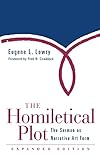
The Homiletical Plot: The Sermon As Narrative Art FormEugene Lowry writes in The Homiletical Plot that when one of our problems is placed next to the Gospel a sermon emerges. Thus we can approach this in two ways. We can either approach it from the problem and see what aspects of the Gospel address this problem, or we can approach it from the Gospel and ask what questions does this particular Aspect of the Gospel address.

The Disabled God: Toward a Liberatory Theology of DisabilityLowry demonstrates this by looking at the Trinity. He states that if one wishes to preach on the trinity one can ask, "What problem or bind does the Trinity get us out of?" Likewise we can take a particular problem and then ask how does the Trinity address this issue? It is interesting to see some theologians taking issues like racism or ecology and then asking how the Godhead addresses such issues. Sally McFague structures her ecology theology on the trinity. Nancy Eisland takes disability as her problem and then asks the question what does Jesus have to say to that problem.

Life Abundant: Rethinking Theology and Economy for a Planet in Peril (Searching for a New Framework)

Our Job is to relate the Gospel to the People


As preachers are job is to relate the Gospel to the people. Like every other kind of preacher there are resources unique to us for this undertaking. So I would ask, can we take a problem like Ecology and Address it with the tools that we have for understanding the Gospel? How does the health message relate to ecology? Does it? How about Racism? does the vision of equality in the Sabbath help us address this perinial problem even among our own ranks? (I have written a seminary paper on this, if you want it email me). While these are all academic problems, we could also ask more practical problems like what does Adventism have to say to the one in your congregation that has just lost a loved one? What does Advnetism have to say to one in your congregation that is struggling with Addiction? And finally what does Adventism have to say to systemic structures of evil in the world? Do we only deal with individuals?

What Problems do our Doctrines Address?


But also looking at it from the other side, what problems do our doctrines really address? For example, one might conclude that the Sanctuary message is solely about calculating the 2300 days to prove that we really weren't wrong on the date 1844. That was truly a question 150 years ago, but does the doctrine have anything to say to us today? I think it does, but remember Lowry pushing us to ask the question what problem is truly address by that doctrine? What bind does it get us out of?

These questions are part of the reason that I began this weblog. I want to begin asking questions of Adventism that we normally do not ask. I also wish to give Adventism a chance to answer...

Friday, February 10, 2006

What is the Core of Adventist Identity?

The Adventist News Network quotes Dr. Paul Peterson (Link No Longer Available) as saying, "We preach a message that is distinct, but if it is not relevant it will not be perceived as part of my personal identity, which means when I am faced with a crisis it won't help me..."? At a Bible Conference that explored Adventist Identity.

Later, Peterson?emphasizes that while the truth does not change, the environment changes and thus we need to explore what this unchageable truth means in this changing culture.

Dr. Niels-Eric Andreasen, president of Andrews University, presents the following definition of an Adventist as "a Christian who waits for Jesus to come"

Such a definition seems to be too simple to be of any value, but the struggle to come up with a simple definition of what it means to be an Adventist in todays world would help the Preacher immensely as the preacher seeks to make the Gospel as understood by Adventists relevant.

Wednesday, February 1, 2006

1888 and Race

I have heard a lot of talk about 1888 and the 1888 message, but we have heard very little on the issue of Race and these two ministers. I remember Elder Dudley used to say that God was trying to come to earth back in 1888, but many white folks were trying to go without the black folks.

God Tried to Remove the Color Line in 1887


Interestingly I looked in the General Conference Bulletin of 1887, one year before that 1888 Conference. During that year God was trying to remove the color line from the Adventist Church by means of A.T. Jones, E.J. Waggoner, and others. I found this on the "Words of the Pioneers" CD.

The discussion begins:

This matter being thus left, the question of the color line was taken up by Elder A. T. Jones, who took the position that no color line should be recognized. Elder J. M. Rees made a few remarks, stating the situation in Tennessee. There is no trouble in the church, but if a minister should go into a place and have the colored people mingle in the congregation with the whites, he would have no white people to talk to.


Resolved to Remove the Color Line


In response Elder D. H. Lamson offered the following: "Resolved, That this Conference recognize no color line."

The General confernce Bulliten of 1887 then continues

An animated discussion followed, in which the following delegates took part: A. T. Jones, J. O. Corliss, S. H. Lane, E. J. Waggoner, R. A. Underwood, and J. H. Cook. On the one side it was argued that the existence of a color line is a great evil, and that it should not be recognized; that there is neither Jew nor Greek, bond nor free, male nor female, but that all are one in Christ Jesus, and that if the people of the South do not want to mingle in a congregation with the colored people, let them stay away. On the other hand, it was argued that the color line does exist, and that nobody can obliterate it, and that inasmuch as this Conference cannot legislate for anybody outside of Seventh-day Adventists, we should take things just as we find them, not arousing any unnecessary prejudice, but preaching the truth to all who come, leaving the Spirit of God to obliterate the color line in the hearts of those who may be converted by the truth.


Waggoner Clarifies the Issue


Elder Waggoner then amended the resolution by substituting the following:

WHEREAS, The Bible says that there is neither Jew nor Greek there is neither bond nor free, but that all are one in Christ Jesus, therefore, Resolved, That it is the decided opinion of this Conference, that when the colored people of the South accept the Third Angel's Message, they should be received into the church on an equality with the white members, no distinction whatever being made between the two races in church relations.


The amendment was carried. Then the conference referred the resolution to a committee to "consider the matter carefully, and recommend proper action to the Conference."

The Reversal


Then at the end of the day we have the following notation in the Bulletin:

As the question pertains to the best methods to be pursued in the presentation of the truth in the South, where persons of African descent are most numerous, and as no one of the committee has had any personal experience in that work, we have deemed it proper to confer with those whose fields of labor have been in that section of the country. As the result of these interviews we find those who are present who have labored in the South unanimous in the opinion that it is easy to pursue a course which will create no disturbance, and do no injustice to the colored people. This being the case, your committee can see no occasion for this Conference to legislate upon the subject, and would, therefore, recommend that no action be taken, and that all reference to this question be omitted from the minutes.


Thus ends God's attempt to use the 1888 messengers to remove the Color line in 1887.

Wednesday, January 18, 2006

What does this have to do with my Salvation?

Keep it Real


My homiletics professor encouraged us to "Keep it real!" When he first told me that a story came to my mind. A zealous elder was "teaching the Sanctuary Message" in Sabbath School. The church was discussing the Sanctuary becuause it was the study of the day in the Sabbath school lesson.

The elder wanted to make it simple so he created a drawing to supplement the lesson. The elder began talking about the geography of the wilderness tabernacle and from the beginning lost the people. He described the importance of the color of the curtains. He described the different pieces of furniture. He then asked the question, "Was the ark of the covenant God the Father's throne or God the Son's throne?" One sister in the audience had had enough. She yelled out "What does this have to do with my salvation?" The elder stumbled and then ignored the answer going right back to his discussion of the minutia of the geography of the Sanctuary.

The Sanctuary So-What!


I then fully realized why the Sanctuary is sat aside by many. It is the same reason why no one preaches on the liniage of Jesus Christ. (I have heard a very good sermon on this by Henry Wright, but it is the only one I have every heard that did not degenerate into a lecture.) Our teaching of the Sanctuary is limited by the fact that we either ignore it or we don't answer the question of that Sister, What difference does this make? Am I better off for knowing this? Why even bring it up? No wonder it is only trotted out during Revlation Seminars when we are trying to prove that Adventism is true by resorting to a mathmatical calculation.

In the end like many of our doctrines, we have not passed the so-what test. Without passing the "so-what test", a teaching is unprofitable and useless. When we preach Advnetism we must stop making it useless either by our disuse or by our faulty use of it.

Monday, January 16, 2006

Adventists and the United States

I was talking to a classmate the other day about the Untied States in the eschatology of Seventh-day Adventism. I told him that in the Adventist understanding of the end time the United States would force people to disobey God and God's law. I assured him that in our thought the United States would become the New Babylon. I then began to feel the adventist evangelist in me well up as I began to quote Revelation 13 and compare it to the actions of the United States. I explained the lamb-horned beast and the image that that beast sets up. Then my classmate told me that all of that was interesting. He then asked the question, "How does this view of the end times inform your understanding of the war in Iraq?"I know that many of us would say nothing.


Is The United States a Beast Today?


Many of us are still hoping to be called evangelical and thus gain acceptablity with the rest of the Christian world. Some are bending over backwards to hide ourselves from the implications of stating that the United States is a Beast. Many of us wish to fade into the background of evagelicalism for we reason that America is better than everyone else. Some of us turn our head when this government removes our liberties becuase of a terrorist threat that it is making worse by starting wars with faulty intelligence. Some of us would turn our head when the military of our country tortuers war prisoners. We argue that they would do the same thing to us.


What would our early pioneers say when they saw slavery as proof that the contemporary United States was speaking like a dragon. I wonder what Ellen White would say when she said that we should not obey the unjust fugitive slave act. What would our pioneers say when this country left throusands of its own citizens in New Orleans.


I ask the same question of us as I my classmate asked me, "What is the relationship of our understanding of the end time and the Iraq war? How we answer this might hint at whether our Americanism is stronger than our prophetic interpretation.

Monday, January 9, 2006

The Gospel or Adventism? Which will you Choose?

Often we hear preacher's place what is termed the Gospel above Adventist distictive beliefs. They say that the Gospel is more important than any of the other doctrines and teachings of Adventism or any group. When we take that as an assumption, and I simply do it for the sake of argument, we are given the choice between Adventism and the Gospel. Not surprisingly many of us chose the Gospel. However such a choice makes our Adventism at best irrelevant and at worst an impediment to the Gospel. Thus the Sabbath, Sanctuary, State of the Dead, and all of these doctrines must step aside while the Gospel stands front and center.


If we take this assumption and our Adventist beleifs are a sidelight that is at best only tangentially related to the Gospel then we must ask the question "Why preach Adventist distinctives at all?" Such a mindset causes the doctrines to be trotted out every so often while the more important "Gospel" is preached. Because many follow such a road there is a backlash among those with more conservative proclivities. Some of these would say that the Gospel is Adventism. At the very least the gospel of the last days is such that we must hold on to Adventism and its deistinctive beleifs. A more softened version of this would say that Adventism is just as importnat as the Gospel and thus should be preached just as often. According to all of these views there is a beleif that Advnetist beliefs should take a stronger role and perhaps stand near the Gospel in presentation.


I wish to propose another road. Instead of saying that Adventism is less important than the Gospel or that Adventism and the Gospel must be balanced, or that the Gospel is Adventism, I would suggest another course. I would suggest that we see and understand the Gsopel through our Adventism. Our Adventism provides stories, pictures, and themes to help us illuminate the Gospel in ways that others would not be able to see. Just as the Methodists with their strong view of holiness brought a light on the Gospel of God to the reformation understanding, we have a role to help illuminate the Gospel.


There are elements that we see that others cannot see due to our doctrines. We are those who see the Gospel through the Sabbath. The one who calls us to rest. The importance of Creation and recreation. We see the Gospel through the Sanctuary. The importance of God with us. The importance of cleansing and ultimate cleansing. We see the gospel through the State of the Dead. There is only life through Christ.


Instead of only preaching Adventism sometimes and the Gospel other times I would suggest that an Adventist preacher must preach both at the same time. If it ain't the Gospel it shouldn't be preached, if it ain't Adventism then why has God chosen you to preach it?