
S. N. Haskell wrote a book entitled
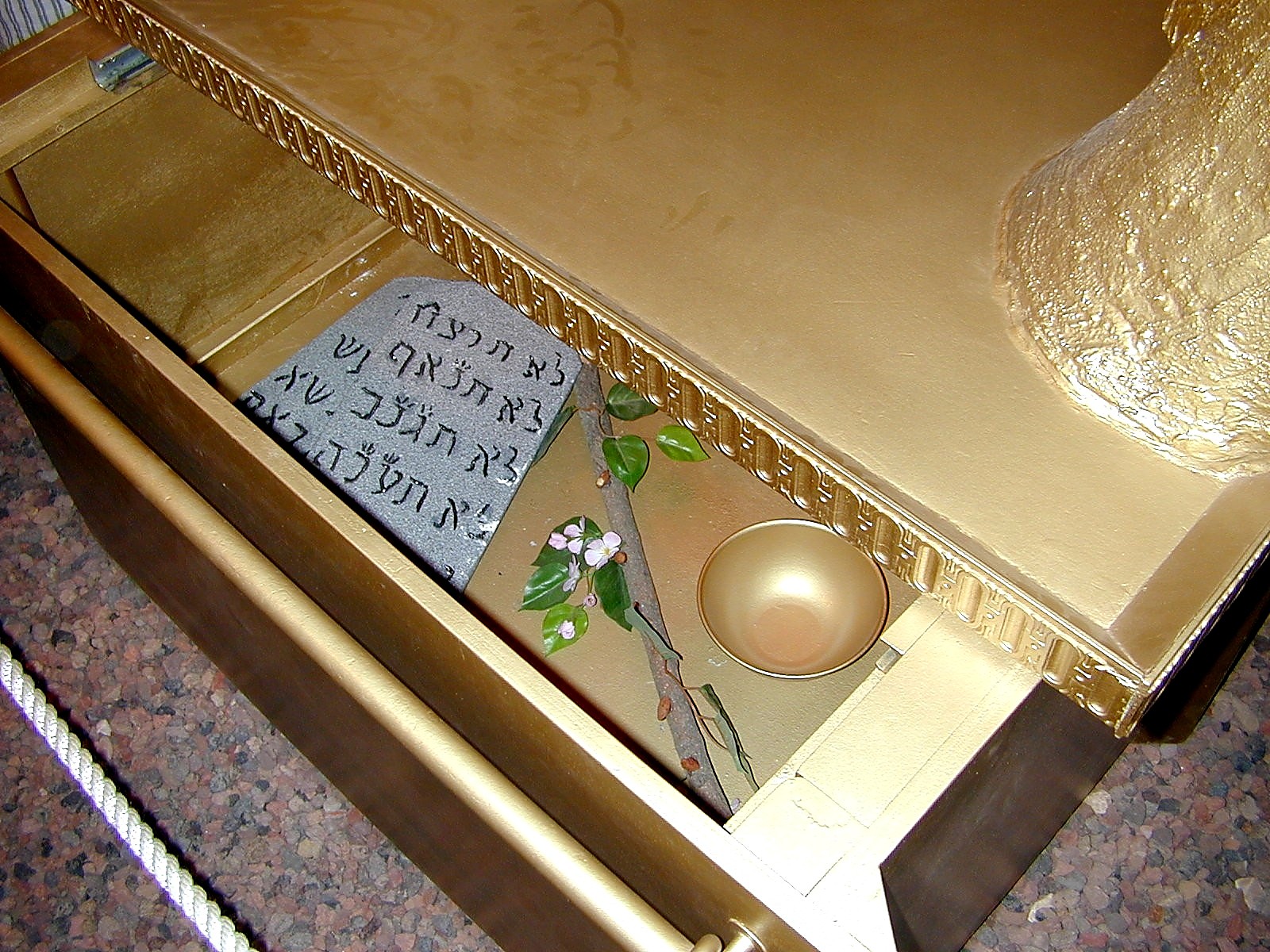
The Cross and It's Shadow. This book was about the type and the antitype of the ancient Hebrew Sanctuary Service. Chapter 31 delineates the requirements of the congregation during the day of atonement in the type and the antitype. I have reproduced that chapter in its entirety.
GOD expected His ancient people to serve Him faithfully every day in the year, and He accepted their services; but when the day of atonement came, there were special requirements enjoined upon them during that day, which, if they failed to observe, they were cut off from the people of Israel. God has accepted the service of His people down through the ages; but when the antitypical day of atonement arrived, and the investigative judgment opened in the heavenly sanctuary, God expects the antitypical congregation on earth to fulfill their part of the antitype just as faithfully as Christ, our High Priest, fulfills His part in the heavens.
Ancient Individuals needed Acceptance
Anciently the congregation was not accepted as a whole; but it was an individual work. (Leviticus 23:29,30). So today each one answers for himself before God. We must not content ourselves by doing just as our fathers did, who passed away before the judgment opened in the courts of heaven. God requires special service of His people now. They are to live while their cases are being decided in heaven, and Satan brings to bear upon the last generation, which are weaker physically than any previous generation, all the wisdom he has gained in a six thousand years’ warfare. Those who, in the investigative judgment, are accounted worthy, will live for a time without a Mediator. Their experience will be different from that of any other company that has ever lived upon the earth. There are many reasons why God in His infinite mercy has enjoined special duties upon the last generation, that they might be more strongly fortified against the attacks of the enemy, and not be overthrown by his devices.
In the ancient service, if an individual failed to keep the day of atonement as God directed, his sins were not confessed over the scapegoat by the high priest; but he was cut off from among the people of God. (Leviticus 23:28-30). The individual who, during the antitypical day of atonement, or the investigative judgment, thinks that Christ will plead his case while he himself ignores the work God has enjoined upon the antitypical congregation, will find at last that his name is blotted out from the book of life. We are saved by faith in our High Priest, but faith without works is dead. (James 2:17). If we have a living faith, we shall gladly do as the Lord directs.
The Requirements of the Congregation
Four things were required of each individual member of ancient Israel on the day of atonement – the twenty-four-hour period in which the typical work of atonement was performed, and which was “an example and shadow†of the real work.
- “ The day of atonement . . . shall be a holy convocation unto you.â€
- “You shall afflict your souls.â€
- “Offer an offering made by fire unto the Lord.â€
- “Ye shall do no work in that same
day.†(Leviticus 23:27,28).
Holy Convocation
That day was to be a holy convocation. The people were to assemble for religious worship. Paul speaks thus of individuals who, in the days when the High Priest should soon come forth from the heavenly sanctuary, would forsake the religious assembly: “Having a High Priest over the house of God; let us draw near with a true heart, in full assurance of faith, having our hearts sprinkled from an evil conscience. . . . Not forsaking the assembling of ourselves together, as the manner of some is; but exhorting one another: and so much the more as ye see the day approaching.†(Hebrews 10:21-25).
The one that takes no pleasure in meeting with those of like faith to worship God, has an “evil conscience,†and has lost faith in the near coming of our High Priest from the heavenly sanctuary. There is a special blessing in worshiping with others. God promises that where even two or three are gathered in His name, He will meet with them. (Matthew 18:20). This first requirement is a spiritual thermometer by which every Christian can test his spiritual condition. If he absents himself from the worship of God because he takes no pleasure in it, his spirituality is very low.
Afflict Soul
Each individual was to “afflict†his soul – search his heart, and put away every sin, spend much time in prayer. With this was connected abstinence from food. This was so forcibly impressed upon the minds of ancient Israel that even at the present day, the Jews fast upon the tenth day of the seventh month.
The individual who realizes that the judgment is going on in the heavenly sanctuary, and that his name will surely be presented before that great tribunal, will search his heart and pray earnestly that God will accept him. We need often to meditate upon the work of our High Priest in the heavenly sanctuary, lest by having the mind filled with earthly thoughts, we, like the foolish virgins, will find when too late that the bridegroom has come, the door is shut; that the work is finished, and we have no part in it.
In the typical service the congregation in the court listened for the tinkling of the golden bells on the robes of the high priest, and in that way followed him in his work. Our High Priest has given signs in the heavens, in the earth, and among the nations to mark the progress of His work; and he said that when we see these signs fulfilled we are to know that He is near, even at the door. (Luke 21:25-33; Matthew 24:29-35, margin).
In spite of the fact that an army, of faithful workers are doing all in their power to withstand the flood of intemperance, Satan is working with such power that drunkenness and crime are increasing in the earth at an alarming rate. Back in 1844, when the investigative judgment opened in heaven, only men and a few women were slaves to tobacco; but now thousands of children are being destroyed by it, and many women are addicted to the filthy habit. Wineries and breweries are increasing in the land, and intoxicating beverages are served in thousands of homes.
God calls upon His people to be masters of their appetites instead of slaves to it, that they may have clearer minds to comprehend divine truth and follow the work of their High Priest in the heavenly sanctuary.
How few are willing to deny themselves the things their appetite craves, even when they know the claims of God! The prophet Isaiah, looking down through the ages, describes the state of things as follows: “In that day did the Lord God of hosts call to weeping, and to mourning, and to baldness, and to girding with sackcloth: and behold, joy and gladness, slaying oxen, and killing
sheep, eating flesh and drinking wine.†(Isaiah 22:12,13). What a vivid picture of the present condition of the world! God calls upon His people to afflict their souls, to control their appetite, to partake of food that will give good blood and a clear mind to discern spiritual truths: but instead of obeying, they engage in “eating flesh and drinking wine.†The prophet records the final result of this course: “It was revealed in mine ears by the Lord of hosts, Surely this iniquity shall not be purged from you till ye die.†(Isaiah 22:14).
The Saviour gave special warning against the evil of giving loose rein to the appetite during the time when the records of human lives are being examined and individuals are being accounted worthy or unworthy of eternal life: “ Take heed to yourselves, lest at any time your hearts be overcharged with surfeiting, and drunkenness, and cares of this life, and so that day come upon you unawares. . . . Watch ye therefore, and pray that ye may be accounted worthy to escape all these
things that shall come to pass, and to stand before the Son of man.†(Luke 21:34-36). The warning is against “surfeiting†– overeating, and “drunkenness “—eating injurious food. In other words, the Saviour designs that His people, during the antitypical day of atonement, shall take heed to both the quantity and the quality of their food. One can becloud the mind and ruin the health by overeating of the best of food. The glutton and the drunkard are classed together: “Be not among winebibbers; among riotous caters of flesh; for the drunkard and the glutton shall come to poverty.†(Proverbs 23:20,21).
Our first parents failed on the test of appetite;(Genesis 3:1-6) but where they failed, Christ triumphed. (Matthew 4:3,4). And it is possible for a Christian, with the indwelling Christ in the heart, to be complete master of his appetite, – to abstain from all food that is injurious, however much the natural appetite may crave it, and not to overeat of good food.
As He entered upon His earthly ministry, the Saviour was not only tested upon the point of appetite, but from childhood He was taught to control His desires. In speaking of His childhood, Isaiah says, “Butter and honey shall He eat, that He may know to refuse the evil, and choose the good.†(Isaiah 7:14,15) His manner of eating developed in Him spiritual power to discern between good and evil. Many who have gone into drunkards’ graves have eaten “ butter and honey,†but Jesus ate it in a way to develop spiritual strength. He ate it according to the Bible rule. There are three texts which, taken together, contain a rule for eating honey, and the same rule will apply to all food that is good. They read as follows: “My son, eat thou honey, because it is good.†(Proverbs 24:13). “Hast thou found honey? eat so much as is sufficient for thee.†(Proverbs 25:16). “It is not good to eat much honey.†(Proverbs 25:27). The one who follows the above instruction, and eats none but good food and only ---so much as is sufficient,†will enjoy good health and a clear mind. God wishes His people to have good health, with souls free from condemnation. (3 John 2). Satan delights in beclouding the brain and destroying the health. All who will fulfil the antitype will be masters of their appetites, that they may prepare to meet the Saviour when He comes to the earth as King of kings and Lord of lords.
Offer an Offering

The third requirement enjoined upon the typical congregation on the day of atonement was to “offer an offering made by fire unto the Lord.†The offerings made by fire were consumed upon the altar. In the antitype we do not offer burnt-offerings of bullocks and rams; but God expects us to fulfil the antitype of the offering consumed upon the altar. He desires that the “whole spirit and soul and body be preserved blameless unto the coming of our Lord Jesus Christ;†(1 Thessalonians 5:23) that the entire life of the Christian be laid upon the altar, ready to be used as the Lord directs. None can do this who do not daily accept Christ as their sin-offering, and know what it is to be “accepted in the Beloved.â€
Day of Rest
The day of atonement was kept as a ceremonial sabbath by the ancient congregation. (Leviticus 23:31). All work was laid aside, and the entire thought was given to seeking God and serving Him. God’s work was given the first thought during the entire day. Such was the type; but it does not follow that on the antitypical day of atonement no one should attend to personal business, for God never intended His people to be “slothful in business.†(Romans 12:11) He promises to bless them in temporal things if they fulfil the antitype by looking after His work and service first, and their temporal interests second. (Matthew 6:31-33) This was beautifully taught by the Saviour’s words: “ Take heed to yourselves, lest at any time your hearts be overcharged with cares of this life, and so that day come upon you unawares.†(Luke 21:34)
Satan is liable to entrap more well-meaning people in this snare than in any other of his many deceptions. He often persuades good people that the daily cares of the household are so important that they have no time to study God’s word and pray, until, for lack of spiritual food and communion with God, they become so weak spiritually that they accept the doubts and unbelief the enemy is constantly presenting. When the time comes that they think they do have time to study their Bibles, they find they have lost all relish for God’s word.
Conclusion
God is testing the great antitypical congregation. Who will fulfill the antitype, and not forsake the assembly of God’s people? Who will keep a clear mind by controlling the appetite, and a pure heart by prayer and deep heart-searching? Who will lay all their interests upon God’s altar, to be used for His glory, and never let the “cares of this life†crowd out God’s work or a study of His word? Over such as these our High Priest will say, “He that is righteous, let him be righteous still : and he that is holy, let him be holy Still.†(Revelation 22:11).
Type |
Antitype |
Leviticus 23:27 - Holy Convocation |
Hebrews 10:25 - Forsake not Assembly |
Leviticus 23:27,29 - Afflict Soul |
Luke 21:34-36; Isaiah 22:12-14 - Watch and Pray |
Leviticus 23:27 - Offer Offering |
1 Thessalonians 5:23; Romans 12:1 - Whole Body Consecrated |
Leviticus 23:30 - Personal Work Laid Aside |
Luke 21:34-36; Matthew 6:32,33 - Cares of Life set Aside |

 One of the common statements made by preachers of many denominations today is that we don't need the doctrines we need Jesus. A false dichotomy is set up between doctrines and Jesus. Jesus is portrayed as a live being in whom we have a relationship, while doctrine is seen as a dry boring addition. Some may argue that it is important, but why take the doctrines when you have Jesus?
 One major flaw with this sentiment that we want Jesus over Doctrine is that it promotes privileging the experiential over the analytical. By that I mean this "relationship with Jesus" is more important than study about "who Jesus was and what Jesus did" which is normally doctrine.
  I don't want to know the generic Jesus that takes 5 minutes to get to know. I want to know the Biblical Jesus. Certainly the 5 minute knoweldge is good at the beginning of our Chrsitian walk, but if 5 years from now that is all you have, the Hebrews admonition will hit us squarely in the eyes.
  I want to know Jesus. If I want to know the real Jesus, certainly I want to know about the fact that our Salvation is demonstrated and renewed in our minds through the only day he blessed, rested, and sanctified, which is the 7th day sabbath. That's Doctrine!!!

 S. N. Haskell wrote a book entitled The Cross and It's Shadow. This book was about the type and the antitype of the ancient Hebrew Sanctuary Service. Chapter 31 delineates the requirements of the congregation during the day of atonement in the type and the antitype. I have reproduced that chapter in its entirety.
 The third requirement enjoined upon the typical congregation on the day of atonement was to “offer an offering made by fire unto the Lord.†The offerings made by fire were consumed upon the altar. In the antitype we do not offer burnt-offerings of bullocks and rams; but God expects us to fulfil the antitype of the offering consumed upon the altar. He desires that the “whole spirit and soul and body be preserved blameless unto the coming of our Lord Jesus Christ;†(1 Thessalonians 5:23) that the entire life of the Christian be laid upon the altar, ready to be used as the Lord directs. None can do this who do not daily accept Christ as their sin-offering, and know what it is to be “accepted in the Beloved.â€
 This afternoon, I attended a seminar on church growth put forth by Dr. Carlton P. Byrd at the Riverside Seventh-day Adventist church in Nashville, TN.
  Download the file at this link.